
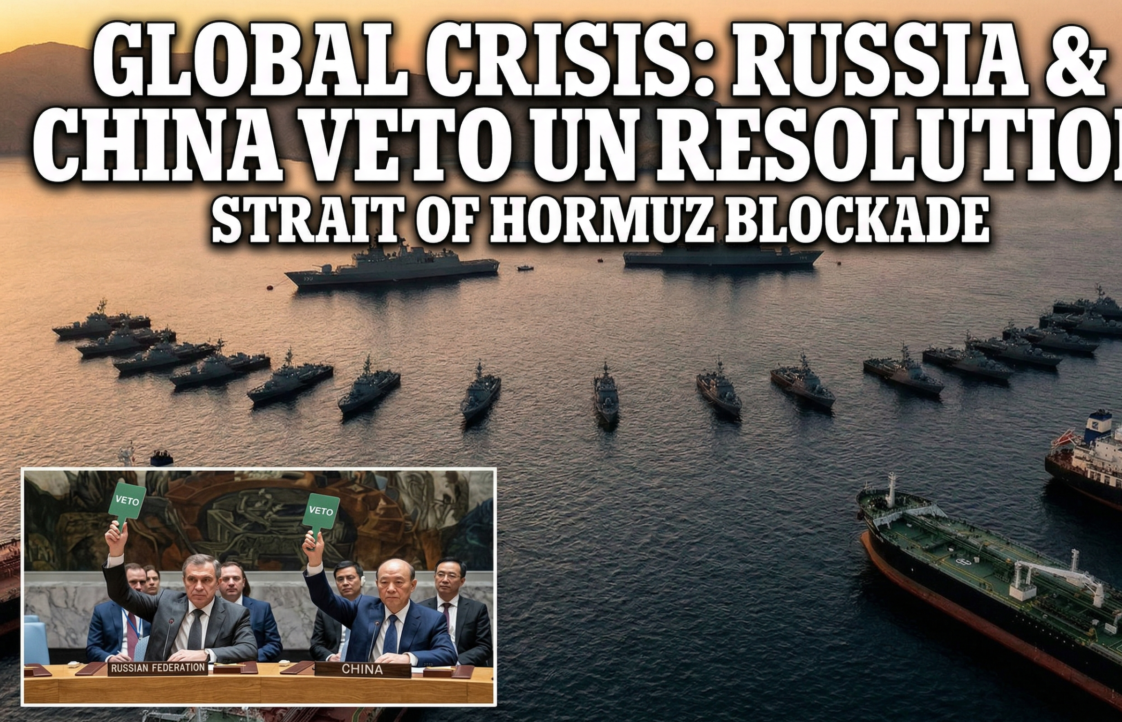
The international geopolitical landscape has officially reached a terrifying and critical flashpoint today.
This unprecedented crisis escalated rapidly after Russia and China officially vetoed a crucial United Nations Security Council resolution.
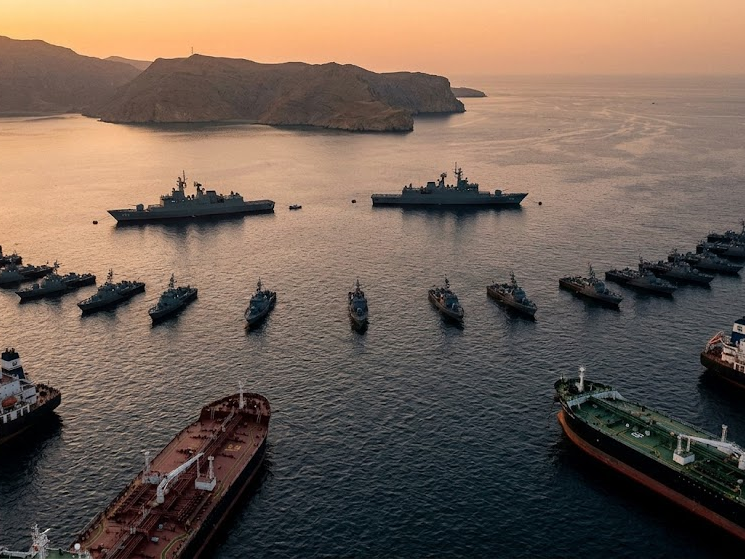
The primary goal of this defeated diplomatic measure was to immediately reopen the highly contested Strait of Hormuz.
This historic vote took place on Tuesday, April 7, 2026, changing the course of international relations forever.
It deals an absolutely massive and devastating blow to the extensive diplomatic efforts spearheaded by Gulf Arab states.
The United States had also heavily backed these efforts to restore vital commercial shipping through this region.
The Strait of Hormuz remains one of the absolute most vital and irreplaceable energy corridors on the entire planet.
The shocking rejection of this highly anticipated resolution occurs amid a rapidly escalating global energy crisis.
Consumers around the world are currently facing skyrocketing fuel prices that threaten to destabilize major economies.
Furthermore, this diplomatic failure unfolds during an entirely unprecedented military standoff in the Middle East.
United States President Donald Trump has dramatically escalated the situation by issuing a terrifying military ultimatum.
He explicitly warned that a whole civilization will die tonight if the Iranian government does not immediately reopen the strategic waterway.
With the complete failure of the UN Security Council to reach a peaceful consensus, the Middle East is pushed closer to the brink.
The world is now staring directly at the highly terrifying prospect of a devastating and uncontrollable regional conflict.
This comprehensive, SEO-optimized article explores the incredibly intricate details of the recently vetoed UN resolution.
We will also dive deep into the specific strategic motivations behind the fierce opposition from both Russia and China.
Furthermore, we will analyze the catastrophic economic impact this blockade is having on global oil and gas markets.
Finally, we will examine the truly terrifying realities facing the international community as all peaceful diplomatic avenues rapidly close.
The Diplomatic Earthquake at the United Nations Security Council
The United Nations Security Council recently convened in New York City under an immense amount of global pressure.
World leaders demanded immediate action to address the crippling and highly illegal blockade of the Strait of Hormuz.
This incredibly narrow but vital waterway has been heavily controlled by Iranian military forces since late February 2026.
Since the outbreak of these violent hostilities, the channel has been completely and entirely shut off to all commercial transit.
This aggressive military action has effectively stranded roughly a fifth of the entire world’s daily oil supply.
Massive shipments of highly valuable liquefied natural gas are also currently trapped within the volatile Persian Gulf.
Understanding the Bahrain-Backed Resolution and Its Goals
The highly debated draft resolution was originally proposed to the council by the government of Bahrain.
It was subsequently heavily sponsored and supported by a massive, unified alliance of powerful Middle Eastern nations.
This influential coalition included the United Arab Emirates, Saudi Arabia, Qatar, Kuwait, and the Kingdom of Jordan.
The absolute primary goal of this urgent measure was to forcefully and legally demand that Iran halt all maritime attacks.
The resolution explicitly ordered Tehran to immediately cease any further interference with peaceful international navigation.
It also strongly demanded an immediate halt to all military strikes directed against critical civilian infrastructure.
This specifically included protecting vital water desalination plants that sustain millions of lives in the arid region.
Behind the heavily closed doors of the UN, the text of the resolution underwent several days of intense, grueling negotiations.
Earlier, more aggressive drafts of the resolution had explicitly invoked Chapter 7 of the established UN Charter.
Invoking Chapter 7 would have legally granted the Security Council the ultimate authority to enforce immediate compliance.
This enforcement could have taken the severe form of crippling economic sanctions or direct, authorized military force.
However, the sponsoring nations quickly recognized that a Chapter 7 mandate would face an instant, guaranteed veto from opposing powers.
Consequently, Bahrain and its regional allies made the difficult decision to significantly water down the aggressive language.
The final, heavily revised draft completely removed any explicit legal authorization for the use of offensive military force.
Instead, the softer text simply and strongly encouraged member states heavily reliant on the strait to coordinate defensive efforts.
These proposed defensive efforts were strictly aimed at ensuring the fundamental safety of maritime navigation in the area.
This included the highly controversial suggestion of providing armed military escorts for vulnerable commercial oil tankers.
The Final Vote: A Deeply Divided International Community
Despite the massive and highly strategic concessions made during the drafting process, the resolution ultimately failed to pass.
The final, highly anticipated vote tally stood at eleven nations in favor, two against, and two official abstentions.
The eleven countries that voted in favor represented a broad, desperate coalition aiming to restore stability to global energy markets.
However, the delegations from Colombia and Pakistan notably chose to completely abstain from the highly controversial vote.
The absolute fatal blow to the diplomatic effort came directly from the two negative votes cast by opposing superpowers.
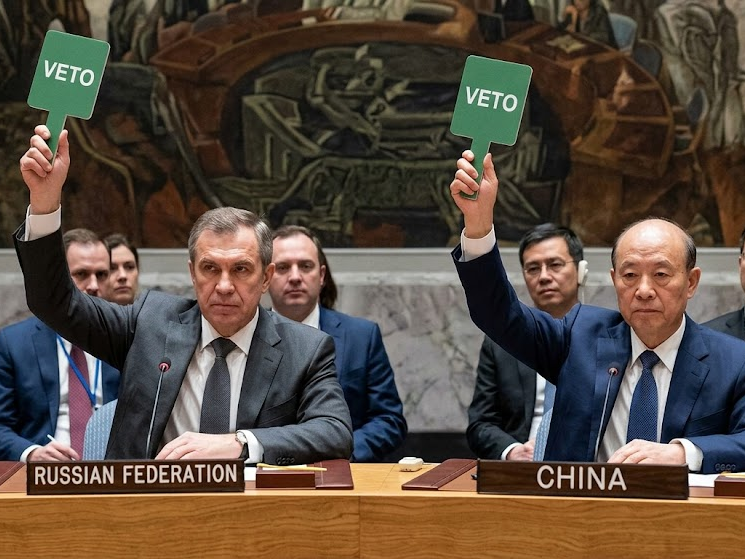
The Russian Federation and the People’s Republic of China officially and firmly voted against the proposed measure.
As permanent, veto-wielding members of the powerful Security Council, their combined opposition instantly nullified the entire resolution.
This highly calculated political maneuver left the frustrated international community completely paralyzed and without a legal mandate.
Why Did Russia and China Block the Hormuz Resolution?
The highly controversial decision by Moscow and Beijing to completely block the resolution was absolutely not a spontaneous move.
It was, instead, a highly calculated, deeply strategic geopolitical maneuver carefully executed on the world stage.
Their actions are deeply rooted in their broader, long-term strategic objectives and their ongoing, fierce opposition to US hegemony.
Accusations of Western Bias and American Aggression
Immediately following the dramatic vote, the Russian and Chinese envoys publicly articulated their specific rationale for utilizing their veto power.
Both powerful nations strongly argued that the Bahrain-backed draft was inherently and deeply biased against the government in Tehran.
They further claimed that the document completely failed to address the actual root causes of the massive 2026 military conflict.
China’s designated UN envoy, Fu Cong, heavily and publicly criticized the specific timing and the underlying intent of the resolution.
He explicitly stated that adopting such a text while the United States was actively issuing threats of annihilation was wrong.
He argued that threatening the outright survival of an entire civilization made passing the resolution a highly dangerous move.
Beijing firmly argued that the measure was essentially just a deceptive political tool designed for Western benefit.
They believed it was specifically designed to provide false legal cover for further military aggression by the United States and Israel.
Russia’s highly vocal UN Ambassador, Vasily Nebenzya, strongly and publicly echoed these exact same anti-Western sentiments.
He sharply noted that the defeated resolution disproportionately focused on maritime security while ignoring the broader war.
He claimed it entirely ignored the broader context of the violent hostilities that originally began in late February.
Nebenzya surprisingly revealed that Russia and China were actively in the complex process of drafting their own alternative resolution.
He claimed this future counter-proposal would address the Middle East crisis much more comprehensively and fairly.
However, specific, verifiable details regarding this alleged Russian-Chinese counter-proposal currently remain incredibly scarce.
The Geopolitical Shift and the War on the Petrodollar
Unsurprisingly, the Iranian government highly praised and loudly lauded the diplomatic actions of Moscow and Beijing.
Iran’s official UN ambassador, Amir Saeid Iravani, publicly thanked the Chinese and Russian delegations for their support.
He praised them for demonstrating what he called a highly responsible and measured use of their immense veto power.
Iravani strongly argued that the draft resolution was a thinly veiled, highly aggressive attempt by Washington to punish the victim.
He continuously maintained that Iran was merely defending its absolute sovereignty and its vital national interests in the Persian Gulf.
He confidently asserted that the veto successfully prevented the Security Council from being illegally misused by Western powers.
He claimed it stopped the UN from being used to legitimize continued, unprovoked aggression against the innocent Iranian people.
Global economic analysts also eagerly point to a much deeper, highly systemic financial motivation behind China and Russia’s stance.
They believe this veto highlights a massive, ongoing opportunity to actively challenge the absolute dominance of the US dollar.
Historically, the US dollar has successfully maintained its global supremacy precisely because of the established petrodollar system.
Because massive global oil transactions are largely settled in American greenbacks, the US maintains immense financial leverage.
By indirectly supporting Iran’s aggressive military control over the Strait of Hormuz, Beijing and Moscow are executing a plan.
They are highly and acutely aware that this blockade is inflicting immense, crippling economic pain on massive Western economies.
This massive global crisis creates a unique, highly unprecedented opening for China to push the yuan as a viable currency.
They hope to establish the yuan as a trusted alternative currency for massive international energy settlements in the future.
This strategic financial move would further and permanently chip away at highly established American financial and economic hegemony.
Fierce Backlash from the United States and Global Allies
The unexpected veto was immediately met with blistering, highly vocal condemnation from the United States government.
European nations and various Gulf allies also expressed massive outrage, viewing the blockade as an existential global threat.
They strongly believe the ongoing situation represents a massive threat to overall global economic stability and peace.
American Outrage Over the UN Veto
The United States ambassador to the United Nations, Mike Waltz, delivered an incredibly scathing and public rebuke.
He directed his massive anger specifically at his Russian and Chinese counterparts immediately following the conclusion of the vote.
Waltz fiercely characterized the double vetoes as marking a deeply depressing and highly dangerous new low in international diplomacy.
He passionately highlighted the severe, rapidly worsening humanitarian consequences directly caused by the ongoing naval blockade.
He accurately noted that Iran’s highly aggressive shutting of the strait was absolutely not just about controlling oil.
He stated it was actively and illegally preventing highly critical medical aid and vital humanitarian supplies from moving.
These blocked supplies are desperately needed to reach massive crisis zones located in the Congo, Sudan, and Gaza.
He loudly declared to the assembly that these nations are effectively holding the entire global economy at gunpoint.
Waltz’s immense frustration was highly palpable as he stated that absolutely no one should ever tolerate such illegal behavior.
He angrily pointed out that despite this fact, Russia and China actively and willingly chose to tolerate it today.
He further and highly aggressively stressed that China and Russia had officially and legally sided with a dangerous regime.
He stated they aligned with a government that actively seeks to ruthlessly intimidate all of its neighbors into total submission.
He ended his speech by warning ominously that this illegal blockade might very well be the Iranian regime’s final act.
Gulf Nations Face Unprecedented Economic Threats
France’s official UN ambassador, Jerome Bonnafont, also expressed his deep and profound regret over the failure of the resolution.
Bonnafont heavily emphasized that the text had been highly deliberately and carefully crafted by its sponsors.
It was designed specifically to encourage strictly defensive, non-lethal measures to safely secure the vital strait.
The goal was to achieve this vital security without rapidly spiraling toward further, highly destructive military escalation.
The highly vulnerable Gulf states, who proudly sponsored the original resolution, were left deeply and profoundly dismayed.
Bahraini Foreign Minister Abdullatif Bin Rashid Al Zayani spoke passionately on behalf of the UAE, Saudi Arabia, Qatar, Kuwait, and Jordan.
He stated with absolute clarity that the Security Council had completely and utterly failed to shoulder its global responsibility.
He claimed they failed to protect the world in the direct face of highly illegal and highly dangerous maritime conduct.
He strongly warned that allowing the Strait of Hormuz to illegally remain closed sets a truly terrifying global precedent.
He claimed this failure effectively transforms the modern world into a highly dangerous jungle where brute force prevails.
He warned it creates a reality where arrogance and unchecked hegemony completely override established international law.
The Ticking Clock: The Imminent American Military Ultimatum
The massive diplomatic failure of the UN resolution is actively amplified tenfold by a highly immediate, terrifying ticking clock.
An incredibly strict American military ultimatum is rapidly approaching, creating a highly volatile global atmosphere.
The Security Council vote took place just mere hours before a highly strict, uncompromising deadline set by the US President.
Over the past highly stressful month, President Trump has repeatedly and aggressively demanded action from Tehran.
He has demanded that Iran unconditionally and immediately reopen the Strait of Hormuz to absolutely all commercial maritime traffic.
As the massive global energy crisis significantly deepened, Trump’s public rhetoric escalated to historically unprecedented, terrifying levels.
He publicly issued a highly firm, completely unyielding deadline of 8:00 p.m. Eastern Time on Tuesday, April 7.
He aggressively warned that failure to strictly comply would result in absolutely catastrophic, devastating consequences for the Iranian nation.
Trump highly explicitly threatened to systematically and entirely obliterate massive sectors of Iranian energy infrastructure.
He threatened to completely destroy vital power plants, crucial desalination facilities, and major energy export hubs.
In a truly chilling, highly unprecedented statement that sent massive shockwaves around the globe, he issued a terrifying warning.
He warned that if peace was not instantly achieved and the strait remained closed, a whole civilization will die tonight.
With the UN Security Council now officially, completely deadlocked and entirely unable to offer a safe diplomatic off-ramp, fear mounts.
The entire world waits in truly terrifying suspense as the deadline rapidly and uncontrollably approaches by the minute.
The highly controversial veto by Russia and China effectively and permanently removes the absolute last remaining multilateral barrier.
It leaves the highly aggressive United States totally free to act completely unilaterally as the strict deadline rapidly expires.
The Catastrophic Economic Fallout of the Strait Blockade
The intense, highly complex geopolitical maneuvering at the UN is currently playing out against a highly terrifying backdrop.
The world is currently facing an absolute, completely unmitigated, and entirely unprecedented global economic catastrophe.
The Strait of Hormuz is universally and widely regarded as the absolute most important oil transit chokepoint on the entire planet.
Before the highly destructive 2026 crisis began, the volume of trade passing through this area was absolutely staggering.
Roughly 20 percent of the entire world’s total daily oil supply successfully flowed through this incredibly narrow channel.
Additionally, massive, highly vital quantities of liquefied natural gas relied entirely on this specific route for global distribution.
Global Energy Markets in Complete Paralysis
Since late February, the situation on the water has deteriorated to an absolutely highly dangerous and lethal level.
Major global shipping companies, specifically including massive corporations like Maersk, CMA CGM, and Hapag-Lloyd, have taken drastic action.
They have entirely, completely suspended all maritime transits directly through the highly contested, highly dangerous strait.
Corporate leadership deemed the massive, highly unpredictable risk of sudden Iranian military strikes to be far too great.
Massive, highly expensive commercial oil tankers have already been violently struck and completely set ablaze by military weapons.
Consequently, the vital maritime passage has effectively and completely become a highly lethal, entirely restricted no-go zone.
This complete, highly unprecedented halt in international shipping has organically created a truly massive, insurmountable global bottleneck.
It is a massive logistical nightmare that the fragile global supply chain simply cannot physically or economically absorb.
The complete inability to safely move extracted oil out of the highly volatile Persian Gulf has caused massive internal problems.
It has rapidly, completely filled up all available physical oil storage capacities situated across the entire Middle East.
This severe lack of physical storage space has directly forced massive, entirely unprecedented, and highly damaging production cuts.
Massive Production Cuts and Force Majeure Declarations
The resulting economic ripple effects have been absolutely devastating and highly crippling for massive, regional energy producers.
In Iraq, highly vital daily oil production at the three main southern oil fields has completely and utterly collapsed.
Production at massive facilities, including the globally renowned Rumaila field, instantly dropped by a staggering 70 percent.
This massive shutdown was caused entirely due to a complete and total lack of available physical storage space.
By mid-March, the Iraqi government was legally forced to officially declare force majeure on all major oil fields.
This highly disruptive legal declaration specifically impacted massive fields actively developed by highly invested foreign companies.
The nation of Qatar has also suffered immensely, with QatarEnergy being forced to completely halt massive gas production.
They also officially declared force majeure on massive, highly lucrative international gas contracts, issuing a terrifying global warning.
They warned the world that the continued, highly disruptive shutdown would absolutely bring down the economies of the world.
Kuwait, Bahrain, and the UAE have all similarly declared force majeure or highly significantly slashed their daily oil production.
Saudi Arabia, the massive oil giant, was highly reluctantly forced to drastically reduce its daily oil production by 20 percent.
The Kingdom was forced to completely shut down highly productive, massive offshore oil fields like the famous Safaniya facility.
In total, wealthy Gulf Arab states have been heavily forced to cut massive production by tens of millions of barrels per day.
The currently missing global oil consists largely of highly vital Medium and Heavy crude extraction grades.
Many massive, highly productive Asian oil refineries desperately and entirely rely on these specific grades to function properly.
The resulting, truly massive global oil shortage has instantly sent retail fuel prices soaring to absolutely historic, unprecedented highs.
This shortage is actively prompting highly severe fuel rationing, highly disruptive rolling power blackouts, and massive economic panic.
This highly terrifying panic is currently sweeping rapidly across massive regions in Asia, Europe, and countless developing nations.
Conclusion
The highly controversial decision by Russia and China to actively block the UN resolution represents a highly defining moment.
It is a truly massive turning point in the highly catastrophic, deeply devastating 2026 Middle East geopolitical crisis.
By aggressively wielding their immense veto power, Moscow and Beijing have effectively and loudly signaled their complete refusal.
They completely refuse to officially endorse any US-led diplomatic or military efforts to break the highly illegal Iranian blockade.
This massive diplomatic failure perfectly and terrifyingly highlights the deep, entirely unbridgeable fractures within the modern global world order.
As the peaceful diplomatic process completely and entirely stalls at the United Nations, the situation grows darker.
The highly intense geopolitical spotlight now aggressively and completely shifts directly back to the White House and Tehran.
With the UN entirely paralyzed, the massive global energy market bleeding, and a terrifying military deadline looming, hope fades.
The complete failure of this highly anticipated resolution officially strips away the absolute final remaining diplomatic safety net.
The incredibly highly critical coming hours will absolutely and definitively determine the immediate future of the entire world.
The global population now watches with highly bated breath to see what highly destructive events will soon unfold.
We wait to see whether this massive diplomatic breakdown will somehow miraculously force an eleventh-hour, highly unexpected peaceful concession.
Or, conversely, we wait to see whether the complete deadlock at the UN Security Council will guarantee total destruction.
FAQs
Q1. What exactly is the highly contested Strait of Hormuz, and why is its complete physical closure so absolutely devastating?
The Strait of Hormuz is an incredibly narrow, highly vital waterway geographically located directly between Iran and Oman.
It physically and vitally connects the highly volatile Persian Gulf to the Gulf of Oman and the broader Arabian Sea.
Q2. Why did the governments of Russia and China officially choose to veto the UN resolution to reopen the vital strait?
Russia and China, who both currently hold permanent, highly powerful veto power on the UN Security Council, intentionally blocked it.
They actively blocked the Bahrain-backed diplomatic resolution because they publicly claimed it was fundamentally and deeply biased against Iran.
Q3. What exactly happens now that the highly anticipated UN Security Council resolution has officially and completely failed to pass?
The absolute failure of the resolution leaves the highly anxious international community completely without a unified, legal diplomatic mechanism.
There is currently absolutely no legal mandate to safely or forcefully demand the reopening of the vital Strait of Hormuz.