
Introduction
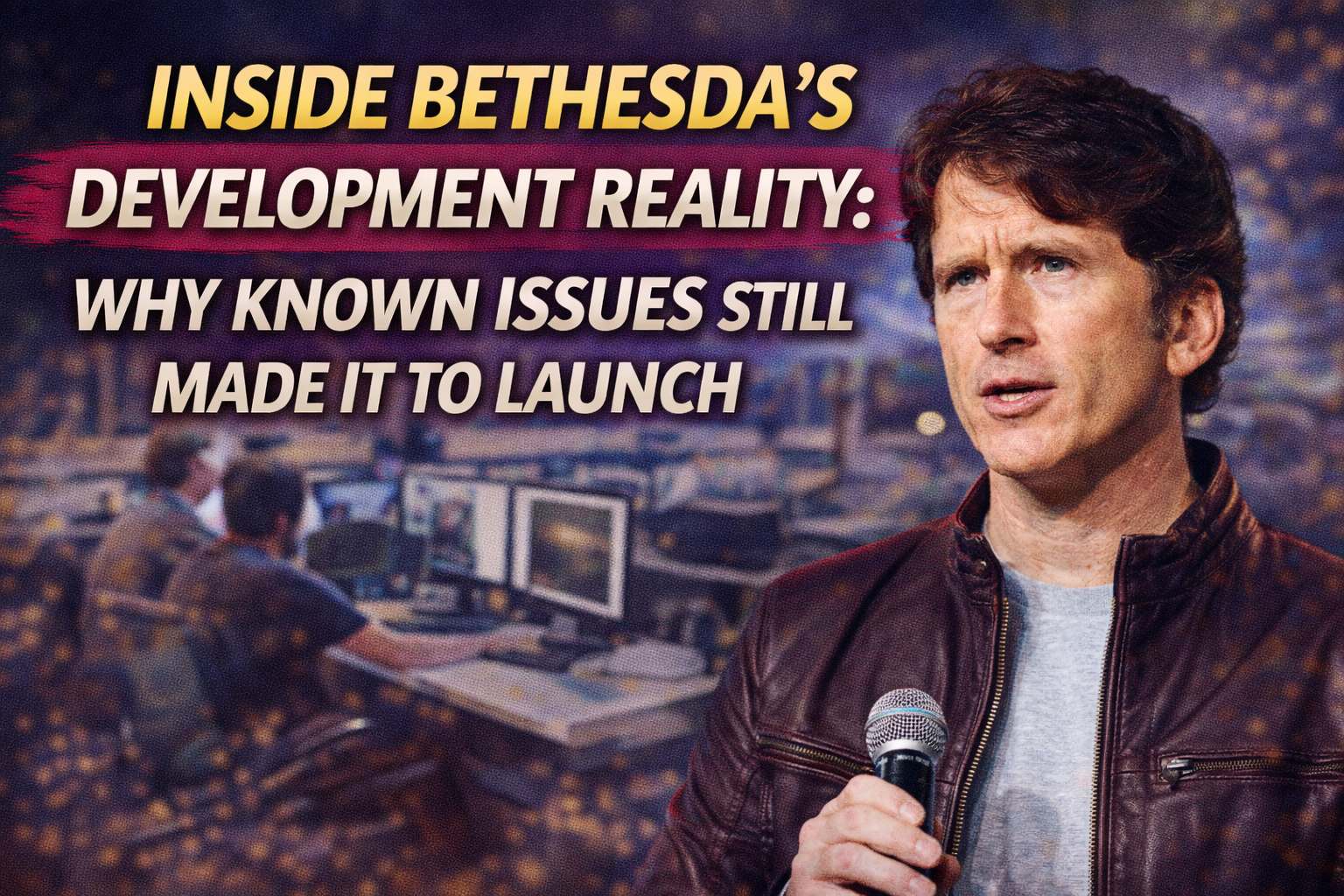
Inside Bethesda’s Development Reality: The gaming industry is no stranger to post-launch criticism, especially when it comes to highly anticipated titles. Recently, a former developer from Bethesda Game Studios shared insight into the internal development process, claiming that “every single developer” had already raised most of the issues players later criticized at launch.
According to the artist, many of these concerns were known long before release—but as Todd Howard reportedly explained, “we can’t do everything.”
This revelation sheds light on the complex realities of game development, decision-making, and the challenges studios face when balancing ambition, deadlines, and player expectations.
Inside Bethesda Game Studios


Bethesda is known for creating large-scale, open-world games.
Key Characteristics
- Massive game worlds
- Complex systems
- Long development cycles
These features make development both ambitious and challenging.
The Developer’s Claim: Issues Were Already Known
A former artist revealed that most player complaints were not surprises.
Main Points
- Internal teams identified issues early
- Feedback was shared across departments
- Many concerns matched post-launch criticism
This suggests that developers were aware of potential shortcomings.
What Kind of Complaints Were Raised?


Common Issues
- Performance problems
- Bugs and glitches
- User interface concerns
- Gameplay balance
These are typical challenges in large-scale games.
The Reality of Game Development
Why Not Everything Gets Fixed
Game development involves trade-offs.
- Limited time
- Budget constraints
- Technical limitations
Even known issues may remain unresolved.
Todd Howard’s Perspective


The statement “we can’t do everything” reflects a common industry reality.
Interpretation
- Prioritization is necessary
- Not all feedback can be implemented
- Decisions must align with deadlines
The Role of Prioritization
Key Decisions
- Which bugs to fix first
- What features to include
- What to delay or remove
Why Developers Speak Out After Release


Reasons
- Transparency
- Frustration
- Desire to inform players
The Gap Between Developers and Players
Challenges
- Different expectations
- Lack of visibility into development
- Misunderstanding of constraints
Crunch, Deadlines, and Pressure


Industry Issues
- Tight deadlines
- Long working hours
- High expectations
Post-Launch Updates and Fixes
What Happens After Release
- Patches
- Performance improvements
- Bug fixes
Many issues are addressed over time.
Community Reactions

Common Reactions
- Frustration
- Criticism
- Support for developers
The Complexity of Open-World Games
Why They Are Hard to Perfect
- Massive environments
- Interconnected systems
- Emergent gameplay
Lessons for the Gaming Industry
Key Takeaways
- Better communication
- Realistic expectations
- Improved testing
The Future of Game Development


Trends
- Advanced tools
- AI-assisted development
- Better QA processes
Conclusion
The comments from a former Bethesda Game Studios artist offer a rare glimpse into the realities of game development. While players often expect polished perfection, the truth is far more complex.
As Todd Howard noted, “we can’t do everything”—a statement that reflects the difficult balance between ambition and practicality in modern game development.
Understanding this balance can help bridge the gap between developers and players, leading to better expectations and, ultimately, better games.
FAQs
1. What did the former Bethesda Game Studios artist reveal?
The former artist claimed that most of the issues players complained about after launch were already identified internally during development.
2. Were developers aware of the game’s problems before launch?
According to the artist, yes—many developers had already raised concerns about performance, bugs, and gameplay issues.
3. Why are some issues not fixed before release?
Because studios must prioritize tasks, meet deadlines, and work within technical constraints.