
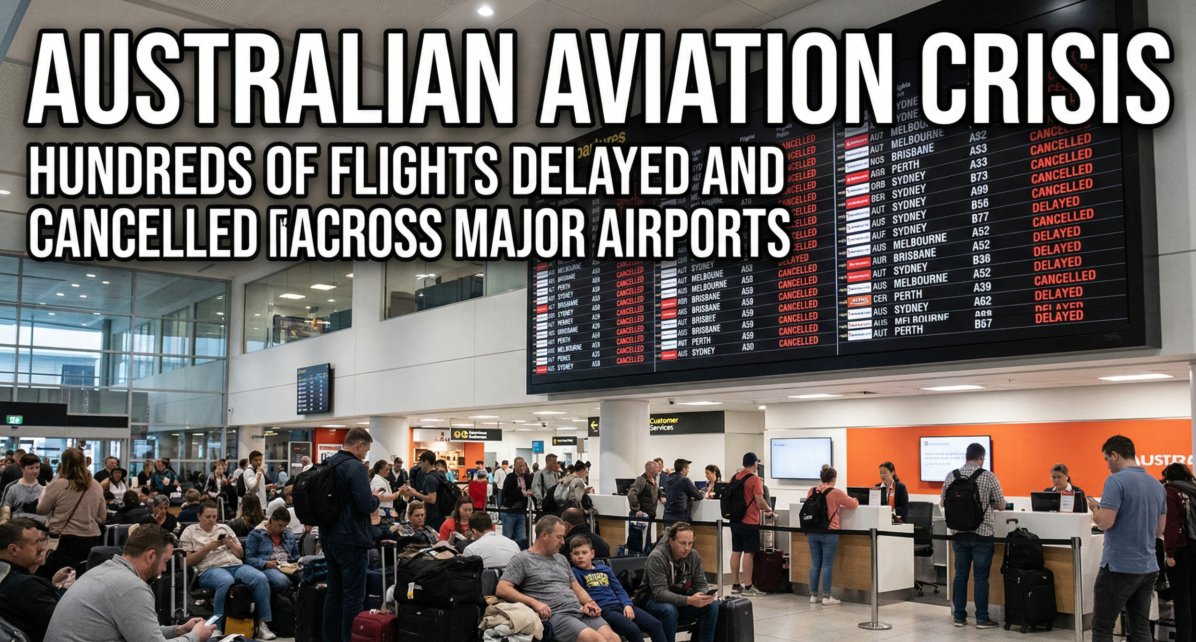
The aviation infrastructure across Australia is currently facing a catastrophic breakdown that has left countless travelers completely stranded.
Recent aviation tracking data has officially confirmed a massive disruption involving the sudden cancellation of 29 flights across the nation.
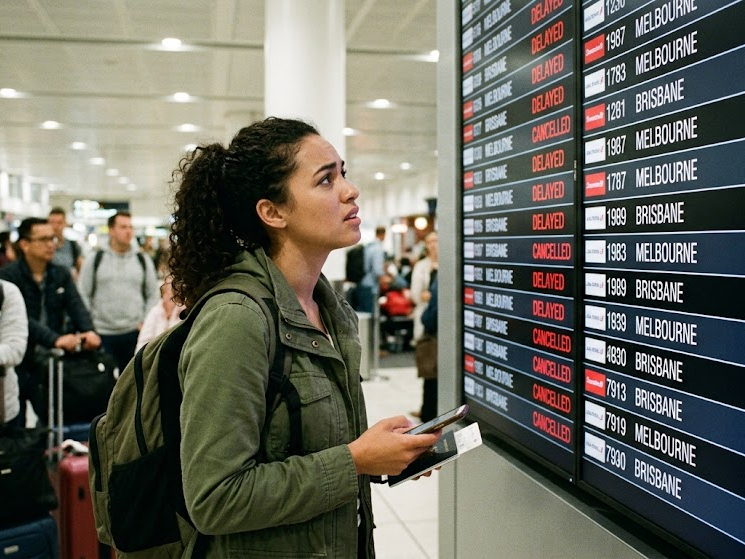
Furthermore, an astonishing 183 additional flights have been subjected to severe, hours-long delays, throwing the entire domestic travel network into absolute chaos.
This unprecedented level of operational failure has heavily impacted the busiest transportation hubs in the country.
Sydney, Melbourne, and Brisbane airports are currently bearing the absolute brunt of this unfolding logistical nightmare.
Countless passengers who were traveling for critical business meetings, emergency family matters, or long-awaited vacations are now facing extreme distress and uncertainty.
When a disruption of this massive scale strikes the domestic network, the negative ripple effects are felt in every single regional and international terminal.
In this highly detailed and SEO-optimized travel guide, we will thoroughly investigate the root causes behind this massive Australian aviation crisis.
We will carefully break down how these specific cancellations are impacting major cities and provide you with actionable advice regarding your legal passenger rights.
The Unfolding Travel Nightmare in Australia
Navigating through an Australian airport today has rapidly transformed into an extreme test of human patience and physical endurance.
The sudden public announcement regarding 29 scrapped routes and 183 delayed departures serves as a harsh reminder of how fragile our modern transportation grid truly is.
When airlines are forced to ground this many aircraft simultaneously, it instantly creates a devastating domino effect that paralyzes the entire continent.
For example, an aircraft that is severely delayed taking off from the tarmac in Sydney will inevitably be incredibly late arriving in Melbourne.
This cascading failure means that the specific aircraft will then miss its subsequent scheduled departure to Brisbane or Perth.
Consequently, even passengers waiting patiently at tiny regional airports are currently experiencing the severe sting of these major metropolitan disruptions.
Airlines are frantically attempting to rebook thousands of displaced passengers onto alternative flights, but spare seating capacity is virtually nonexistent today.
Because modern commercial flights routinely operate at maximum capacity, this sudden lack of available seats is forcing many travelers into unexpected overnight layovers.
Airport terminal departure boards from coast to coast are currently glowing with bright red text, universally signaling lengthy delays and last-minute cancellations.
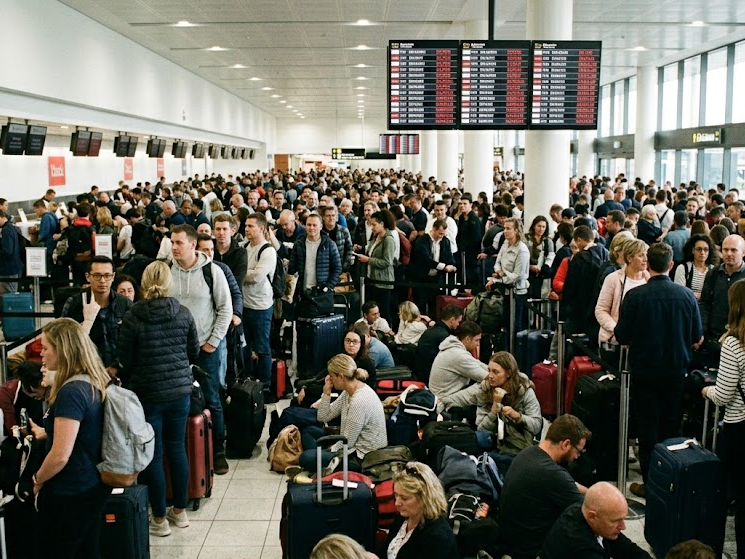
Exhausted airport ground staff are working tirelessly under immense, unyielding pressure to manage the massive crowds of confused and angry travelers seek
ing immediate assistance.
Sydney Kingsford Smith Airport: Ground Zero for Flight Disruptions
To truly comprehend the massive scale of this national travel crisis, we must first look closely at the chaotic situation unfolding at Sydney Kingsford Smith Airport.
Sydney traditionally operates as the absolute busiest and most critical aviation hub in all of Australia.
Therefore, when Sydney experiences any form of operational slowdown, the entire national flight grid immediately suffers the dire consequences.
Sydney Airport is currently acting as the primary epicenter of these disruptions, accounting for a highly significant portion of the 183 delayed flights recorded today.
Frustrated passengers attempting to depart from Sydney are currently reporting massive, winding queues at security checkpoints that stretch outside the terminal doors.
Simultaneously, incoming domestic and international flights are being forced into holding patterns over the Pacific Ocean while waiting for clearance to land.
This holding pattern forces airlines to burn highly expensive aviation fuel while passengers endure turbulence and mounting anxiety.
The incredibly strict airport noise curfew in Sydney further complicates this delicate situation.
If delayed evening flights cannot secure a departure slot before the nightly curfew begins, those specific flights must be cancelled entirely.
This strict curfew reality leaves thousands of evening commuters stranded in Sydney with absolutely no alternative way to reach their final destinations.
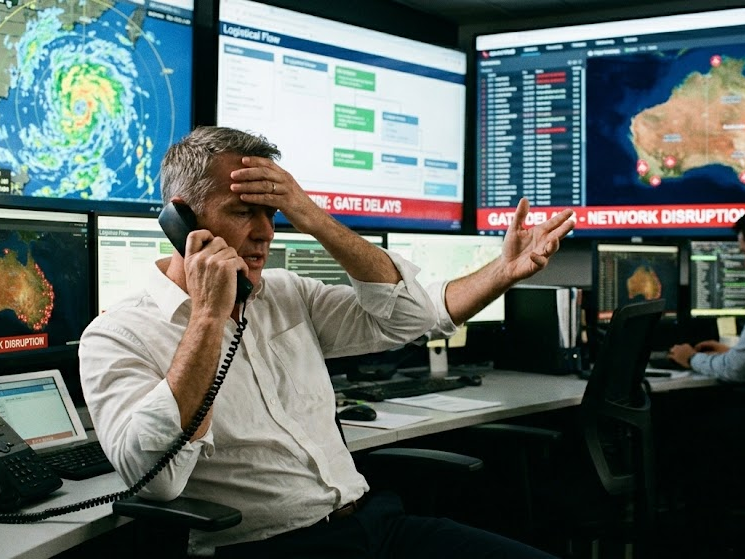
Melbourne Airport: Caught in the Crossfire of Weather and Staffing
Melbourne Airport is also facing severe, crippling operational challenges today, contributing heavily to the national tally of 29 completely cancelled flights.
As the second busiest aviation facility in the nation, Melbourne serves as a highly critical connecting hub for travelers moving between the northern states and Tasmania.
Travelers currently trapped inside the Melbourne terminals have expressed immense, vocal frustration over the sudden lack of clear, timely communication from major airline representatives.
Many exhausted passengers have reported sitting on the tarmac inside fully boarded aircraft for well over an hour before the flight was eventually cancelled.
These tarmac delays frequently result in passengers being forced to awkwardly disembark due to sudden airline crew timeouts.
The massive, growing backlog of delayed flights at Melbourne is forcing airline executives to make incredibly difficult, last-minute decisions regarding route prioritization.
Airlines must quickly decide which highly profitable routes to save and which smaller, regional routes to ultimately scrap for the day.
This corporate triage often leaves regional travelers feeling completely abandoned by the major domestic carriers during times of crisis.
Brisbane Airport: The Domino Effect on Queensland Travel
Brisbane Airport serves as the vital, sun-drenched gateway to the state of Queensland, yet it has unfortunately not escaped this massive wave of national aviation chaos.
While Brisbane may occasionally avoid the severe, freezing weather systems that frequently plague the southern Australian cities, its operational success relies entirely on incoming traffic.
Brisbane operations depend heavily on aircraft arriving precisely on time from the heavily congested Sydney and Melbourne corridors.
Because those southern aircraft are currently heavily delayed or cancelled, Brisbane is experiencing a massive, artificial spike in its own departure delays.
Business travelers attempting to commute along the highly lucrative eastern seaboard golden triangle are finding their meticulously planned schedules completely ruined.
Families attempting to begin their expensive tropical Queensland holidays are instead spending their first precious day sleeping on uncomfortable airport terminal floors.
The backlog in Brisbane is rapidly creating secondary delays for flights heading further north to popular tourist destinations like Cairns and Townsville.
What is Actually Causing These Nationwide Aviation Failures?
Understanding the precise, underlying root causes of these massive travel disruptions is absolutely essential for frustrated passengers seeking logical answers.
While airlines often issue generic apologies blaming operational requirements, the reality of managing 29 cancelled and 183 delayed flights points to several converging, systemic issues.
The Impact of Severe and Unpredictable Australian Weather
One of the most frequent and entirely unavoidable culprits for massive aviation disruptions in Australia is severe, highly unpredictable weather patterns.
High-speed crosswinds, intense electrical thunderstorms, and thick, low-lying fog can completely and instantly paralyze an airport’s runway operations.
When severe weather directly strikes a major hub like Sydney or Melbourne, Air Traffic Control is legally forced to dramatically reduce the number of aircraft movements.
This necessary, non-negotiable safety protocol instantly creates a massive, compounding backlog of flights waiting for highly coveted departure and arrival slots.
Even if the weather is perfectly clear and sunny in Brisbane, a severe storm in Melbourne will permanently prevent the assigned aircraft from ever reaching Queensland on time.
The Ongoing Crisis of Air Traffic Control Shortages
Another massive, underlying issue currently plaguing the Australian aviation industry is chronic and severe staffing shortages within the Airservices Australia organization.
Air Traffic Control is an incredibly high-stress, highly specialized profession that requires years of rigorous training and absolute, unwavering precision.
When unexpected illness, severe fatigue, or mandatory legal rest periods reduce the number of available controllers on duty, the airspace capacity must be safely reduced.
Without enough highly trained professionals to safely guide commercial aircraft through the complex sky corridors, ground stops are legally mandated to prevent mid-air collisions.
These severe staffing shortages directly and undeniably contribute to the massive number of delayed flights we are witnessing today.
Airplanes are simply forced to wait idle on the ground, burning fuel and patience, until the airspace can safely and legally accommodate them.
Mechanical Faults and Rigid Crew Fatigue Regulations
Beyond weather events and air traffic control constraints, the commercial airlines themselves are facing their own severe internal operational challenges.
Airlines are currently operating their aging aircraft fleets at absolute maximum capacity, leaving absolutely zero room for error or unexpected mechanical failures.
If a single aircraft experiences a minor engineering fault that legally requires a sudden safety inspection, that specific plane is immediately grounded by mechanics.
Because modern airlines operate with virtually no spare backup aircraft waiting idle on the tarmac, grounding one single plane means its next scheduled flight must be suddenly cancelled.
Furthermore, commercial flight crews are strictly bound by incredibly rigid aviation fatigue laws that dictate exactly how many consecutive hours they can legally work.
If a flight is delayed on the tarmac by several hours, the pilots and cabin crew may legally time out of their shift.
When a crew times out, the airline must frantically scramble to find a replacement crew on standby or cancel the flight entirely to comply with safety laws.
How Major Carriers Like Qantas, Jetstar, and Virgin Are Handling the Chaos
The massive, unprecedented scale of 29 cancellations and 183 delays requires an immediate, massive logistical response from Australia’s major domestic carriers.
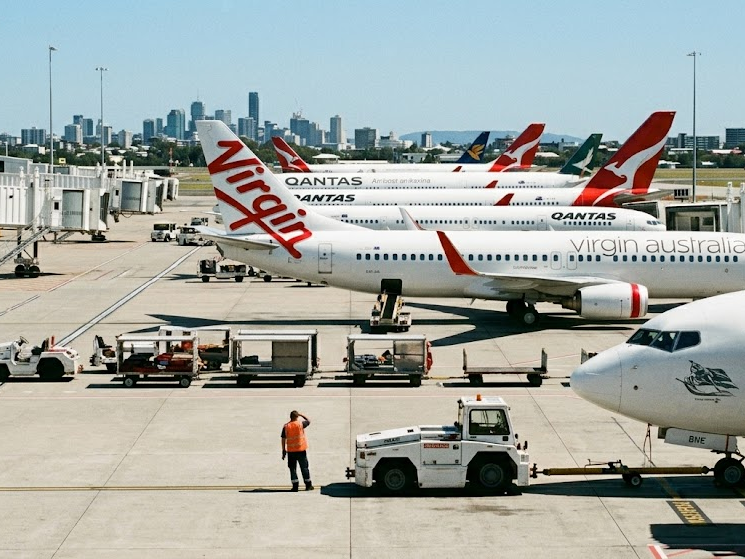
Qantas and its budget subsidiary, Jetstar, typically handle a massive, dominant portion of all domestic Australian air traffic on any given day.
When massive network disruptions occur, Qantas traditionally attempts to utilize its larger wide-body aircraft to consolidate passengers from multiple cancelled smaller flights.
However, Jetstar passengers often face much longer, agonizing wait times for rebooking, as the budget carrier operates with much tighter turnaround times and less spare seating capacity.
Stranded passengers have repeatedly taken to various social media platforms to heavily criticize the incredibly long wait times experienced when calling the airline customer service hotlines.
Virgin Australia is also fighting a massive uphill battle to regain control of its daily schedule amidst this massive national disruption.
The airline has publicly stated that its primary operational focus is safely getting stranded passengers to their final destinations as quickly as physically possible.
Virgin Australia ground staff are currently working incredibly long, exhausting shifts to assist frustrated passengers with rebooking options and providing emergency meal vouchers.
Despite these valiant human efforts, the sheer overwhelming volume of 183 delayed flights means that even the most dedicated customer service teams are completely overwhelmed.
Understanding Your Legal Passenger Rights in Australia
When flights are unexpectedly cancelled across Australia, it is absolutely vital for every traveler to intimately understand their specific consumer legal rights.
Unlike the heavily regulated European Union, Australia does not possess a blanket, federally mandated financial compensation scheme for delayed or suddenly cancelled flights.
Instead, your specific passenger rights are heavily dictated by the detailed Conditions of Carriage outlined by each individual airline when you originally purchased your ticket.
The Australian Competition and Consumer Commission explicitly states that airlines must legally provide a remedy if they fail to deliver the transportation service you purchased within a reasonable timeframe.
If an airline cancels your flight due to reasons entirely within their operational control, such as a crew shortage or a mechanical fault, they must offer a solution.
They must generally offer you a completely free alternative flight to your destination or a full financial refund of your original ticket price.
If you are unexpectedly forced to wait overnight away from your home due to an airline’s operational fault, the carrier is typically responsible for your welfare.
They should legally provide you with safe hotel accommodation, airport transfers, and sufficient meal vouchers for the duration of the delay.
However, if the massive delays are caused by events strictly outside of the airline’s control, such as severe weather or air traffic control strikes, they are not legally required to pay for your hotel room.
It is absolutely crucial to politely but firmly advocate for your rights at the customer service desk to ensure you receive the proper care and compensation you deserve.
Proactive Travel Strategies for Surviving Airport Mayhem
If you find yourself helplessly trapped in the middle of these 29 cancelled and 183 delayed flights, there are several proactive steps you can immediately take.
First, immediately download your specific airline’s official mobile application and ensure you turn on all push notifications for live gate updates.
The mobile app is frequently updated with sudden gate changes and cancellation notices much faster than the physical airport terminal display screens.
Secondly, do not simply stand in the massive, winding customer service queue at the airport terminal and wait for hours.
While you are physically standing in that line, you must simultaneously call the airline’s customer service phone hotline on your mobile device.
Oftentimes, a phone agent located in a completely different city can successfully rebook you on a new flight long before you ever reach the physical desk agent.
Thirdly, always ensure you have purchased comprehensive travel insurance immediately after booking any domestic or international flight ticket.
A high-quality travel insurance policy will happily reimburse you for unexpected hotel stays, emergency meals, and lost prepaid holiday deposits when the airlines legally refuse to pay.
Finally, please remember to always treat the airport ground staff with absolute respect and basic human decency during these stressful events.
The frontline employees working at the boarding gates did not cause the severe weather or the mechanical faults, and yelling at them will absolutely not make an airplane magically appear.
Conclusion
The incredibly frustrating reality that flights are currently being cancelled across Australia is a stark reminder of the complex logistics keeping our modern world connected.
With 29 flights completely scrapped from the schedule and a staggering 183 flights severely delayed, Sydney, Melbourne, and Brisbane airports are currently facing a massive operational nightmare.
Whether these massive disruptions are driven by sudden violent storms, chronic air traffic control staffing shortages, or unexpected airline mechanical failures, the end result is exactly the same for the stranded passenger.
Travelers must always remain highly vigilant, deeply understand their specific consumer rights under Australian law, and always pack a significant amount of patience when heading to the airport.
By utilizing smart travel strategies, relying heavily on robust travel insurance policies, and staying completely informed, you can successfully navigate this massive Australian aviation crisis with your sanity intact.
FAQs
Q1. What should I do first if I arrive at Sydney or Melbourne airport and find out my flight is suddenly cancelled?
The very first thing you must do is immediately check your airline’s official mobile app to see if their automated system has already rebooked you on a later flight.
If you have not been automatically rebooked, immediately join the physical customer service line while simultaneously calling the airline’s phone support hotline to double your chances of speaking to an agent quickly.
Q2. Am I legally entitled to a free hotel room if my Australian domestic flight is severely delayed overnight?
You are only entitled to a free hotel room if the specific cause of the massive delay or cancellation was completely within the airline’s operational control, such as a staffing shortage or a mechanical breakdown.
If the flight was explicitly cancelled due to severe weather or an air traffic control mandate, the airline is not legally required to provide you with accommodation, which is why having robust travel insurance is absolutely critical for all passengers.
Q3. Why do flight delays happening in Sydney cause my scheduled flight out of Brisbane to be cancelled?
The Australian aviation network is incredibly interconnected, and airlines continuously fly the exact same physical aircraft back and forth between the major eastern seaboard cities all day long.
If an aircraft is heavily delayed due to a morning storm in Sydney, it will be late arriving in Melbourne, which means it will inevitably be late or completely cancelled when it is finally supposed to reach Brisbane later that evening.