
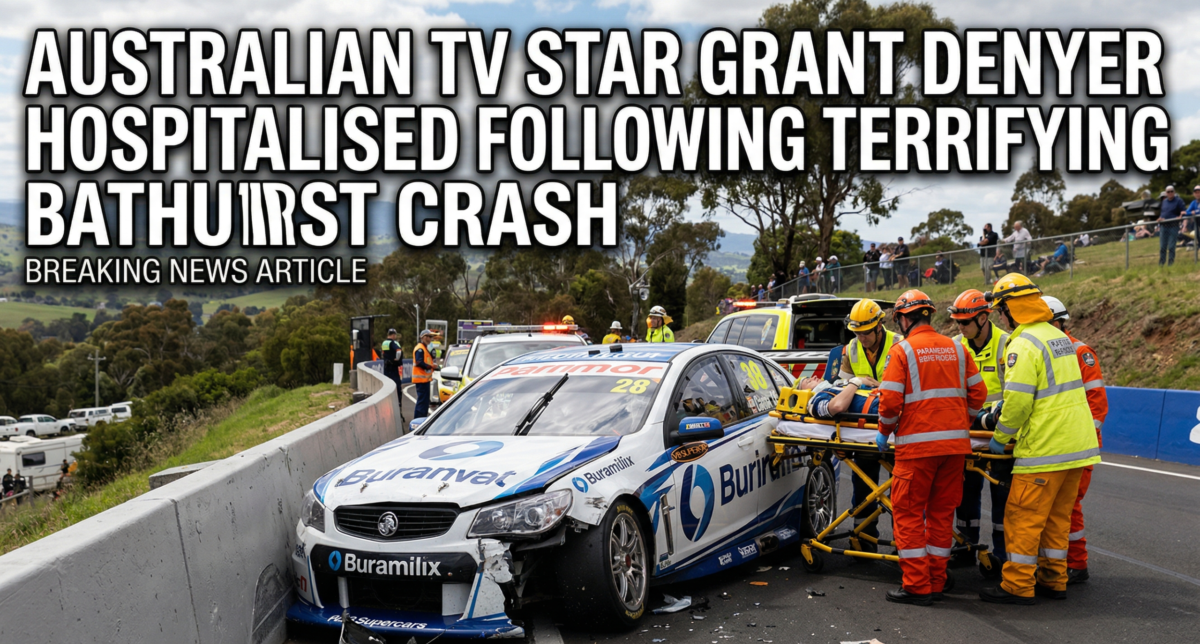
Famous Australian media personality Grant Denyer has recently been admitted to the hospital after surviving a truly catastrophic motor racing accident.
The shocking and violent incident took place during the highly anticipated Bathurst 6 Hour endurance event at the legendary Mount Panorama Circuit.
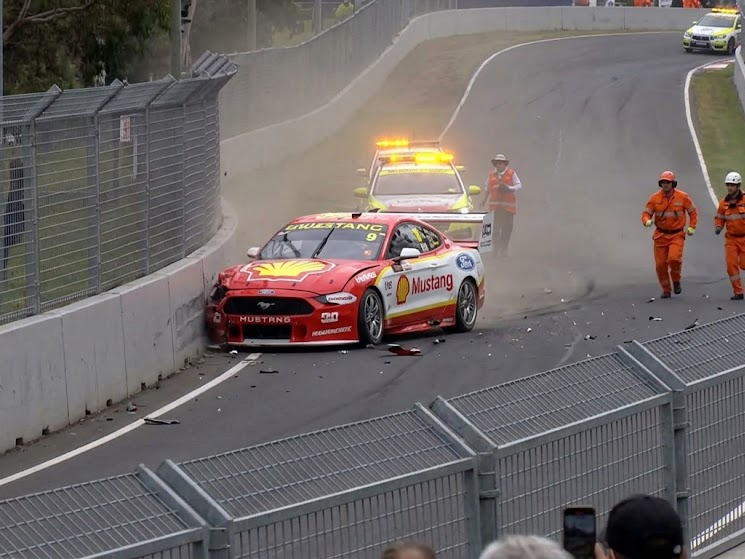
Spectators watching from the grandstands and fans tuning in via live television broadcasts were left completely breathless as the disaster unfolded.
Denyer is most commonly recognized for his charismatic hosting duties on major network television programs like Family Feud and Deal or No Deal.
However, he also leads an incredibly thrilling double life as a highly skilled and fiercely competitive professional motorsport driver.
This recent weekend event brutally showcased the immense, life-threatening risks that are inherently attached to the world of high-speed endurance racing.
The violent crash has understandably sent massive waves of deep concern throughout both the mainstream Australian entertainment sector and the dedicated racing community.
Taking on the treacherous corners of Mount Panorama is a notoriously dangerous endeavor for even the most seasoned professional drivers.
This latest multi-car pileup serves as a very grim and sobering reminder of the massive physical stakes involved in this extreme sport.
As chaotic footage of the wrecked vehicles began circulating rapidly across various social media platforms, an overwhelming flood of support poured in for the celebrated television host.
This detailed article will provide an in-depth analysis of exactly how the terrifying collision occurred and the current medical status of everyone involved.
The Unforgiving Concrete Walls of Mount Panorama
In order to fully comprehend the absolute severity of this weekend’s accident, one must first understand the terrifying layout of the Bathurst racing circuit.
This legendary Australian racetrack is deeply revered and genuinely feared by professional drivers all across the entire globe.
The track is infamous for its incredibly steep mountain inclines, totally blind corners, and dangerously narrow asphalt passes.
Modern, purpose-built racing facilities usually feature massive, paved runoff areas designed to safely catch cars that slide off the track.
Bathurst, however, operates as a traditional, old-school street circuit that is carved directly into the rugged side of a steep mountain.
Solid, unyielding concrete walls heavily line the absolute outer edges of the designated racing surface.
This incredibly tight track configuration leaves absolutely zero margin for any sudden driver errors or unexpected mechanical vehicle failures.
The specific location where this horrific three-car collision took place is known in the racing community as Griffins Bend.
Griffins Bend is widely considered to be one of the most treacherous and technically demanding sections of the entire mountain course.
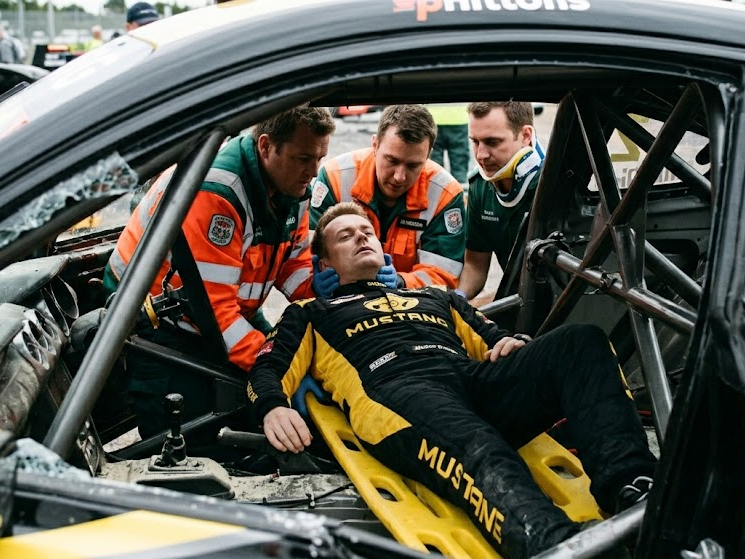
It legally requires drivers to aggressively slam on their brakes from massive top speeds while simultaneously steering into a highly technical right-hand turn.
When multiple race cars from entirely different vehicle performance classes are actively fighting for the same piece of track, the danger level skyrockets.
Endurance events like the Bathurst 6 Hour further compound these intense physical challenges by introducing the element of severe human fatigue.
Drivers must also contend with constantly shifting weather conditions and incredibly heavy vehicular traffic over the course of six grueling hours.
Successfully navigating this legendary circuit lap after lap requires an absolutely perfect blend of intense mental concentration and immense physical stamina.
Breaking Down the Terrifying Three-Car Collision
The terrifying and chaotic sequence of events began unfolding approximately four hours into the highly grueling Bathurst 6 Hour endurance race.
Grant Denyer was actively and aggressively piloting his incredibly powerful Class A2 Chevrolet Camaro around the mountain track.
He was pushing his high-performance vehicle to its absolute limits in a desperate attempt to gain valuable track position against his fierce competitors.
Driving directly ahead of his roaring Camaro was Richard Barram, who was competitively steering a Class C Volkswagen Scirocco.
As the two highly competitive drivers rapidly approached the notoriously difficult braking zone of Griffins Bend, Denyer made a bold strategic decision.
The television host boldly attempted to execute a very late and highly aggressive overtaking maneuver on the slower Volkswagen.
Unfortunately, the incredibly tight and narrow confines of that specific corner resulted in heavy, unavoidable physical contact between the two fast-moving cars.
This initial, high-speed impact instantly and completely destabilized both racing vehicles, sending them violently veering out of their driver’s control.
Both the Camaro and the Scirocco were violently forced completely off the designated, safe racing line.
To make this terrifying situation significantly worse, that specific portion of the racetrack was actually operating under a strict double-waved yellow flag warning.
This critical and legally binding safety caution was actively in place because another vehicle was already sitting stranded on the track.
A Class E Mazda, driven by competitor Matt Kiss, was sitting completely stationary on the outside concrete wall of the blind corner.
The violently out-of-control Volkswagen Scirocco driven by Barram had absolutely nowhere to safely go to avoid the impending disaster.
Barram’s vehicle careened wildly across the track and smashed directly into the side of the helpless, stationary Mazda.
This massive, secondary high-speed impact completely destroyed the entire front end of the Volkswagen before it eventually clattered violently into the concrete barrier.
Simultaneously, Grant Denyer’s incredibly heavy Chevrolet Camaro slammed brutally into a solid concrete barricade on the opposite side.
The impact was so incredibly severe that it ripped the front left tyre completely away from the Camaro’s metal chassis.
The smashed, smoking, and heavily dented Chevrolet finally came to a grinding, terrifying halt on the complete opposite side of the racing surface.
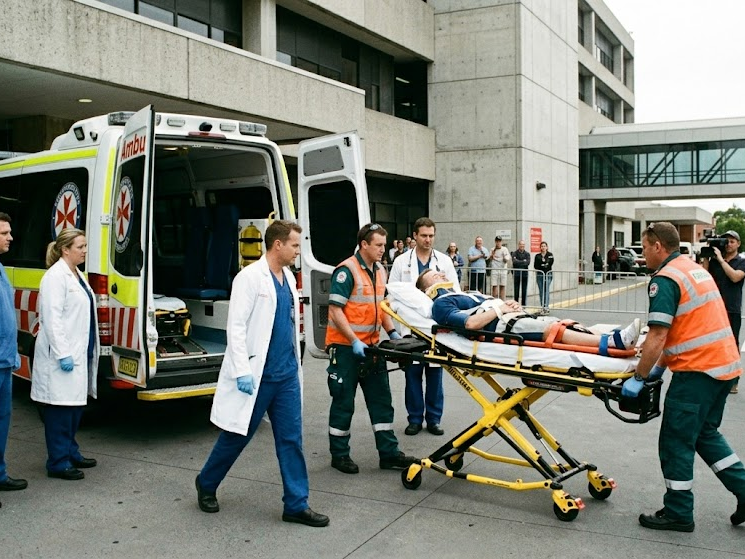
Immediate Emergency Medical Response at the Scene
The sheer, terrifying violence of the multi-car collision immediately triggered a massive, highly coordinated emergency response protocol.
Dedicated trackside medical teams, trained specifically for these exact catastrophic scenarios, were instantly dispatched to the crash site.
The entire endurance race was instantly neutralized by race control as highly trained rescue crews and safety marshals rushed frantically to the chaotic scene.
Live television broadcast images provided by the network showed the truly devastating and heartbreaking extent of the vehicular damage.
Rescue workers could be seen carefully and methodically assessing the trapped and injured drivers inside their mangled roll cages.
Matt Kiss, the incredibly fortunate driver of the initially stationary Mazda, miraculously managed to avoid any serious, life-threatening physical injuries.
Despite absorbing a massive, direct impact from the out-of-control Volkswagen, Kiss was able to walk away from the wreckage.
However, the medical situation for both Grant Denyer and Richard Barram required immediate, urgent, and highly specialized hospitalisation.
A dedicated spokesperson for the New South Wales Ambulance service officially confirmed the medical transport of two adult males.
The official statement reported that two men in their forties were carefully transported directly from the racing circuit for emergency medical treatment.
Grant Denyer was successfully and carefully extricated from his heavily damaged Chevrolet Camaro by the expert rescue crews.
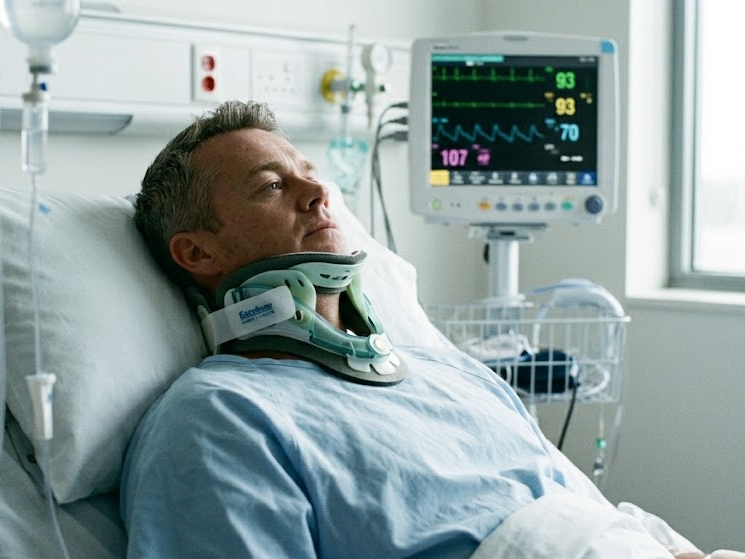
He was officially transported to a local medical facility in a stable condition, suffering from a highly suspected and incredibly painful shoulder injury.
Due to the highly specific and concerning nature of his physical injuries, the popular television host was rushed directly to Orange Hospital.
At Orange Hospital, he was slated to undergo a comprehensive medical assessment and a series of necessary diagnostic scans.
Richard Barram also required highly urgent medical attention and was treated on the grassy sidelines of the track for severe bodily trauma.
Paramedics treated Barram at the active scene for severe, painful leg and rib injuries before he was safely transferred to the waiting hospital ward.
The highly sobering sight of Denyer’s completely destroyed Chevrolet Camaro being unceremoniously towed away on a flatbed truck deeply silenced the watching crowds.
Grant Denyer’s Lifelong Dedication to Professional Motorsport
While millions of dedicated Australians happily invite Grant Denyer into their cozy living rooms every single evening, his other life is drastically different.
His exciting, parallel life as a highly competitive and fearless race car driver is equally fascinating and deeply impressive.
The forty-eight-year-old television personality has miraculously managed to perfectly balance an incredibly demanding daily broadcasting career with a profound love for speed.
He holds a lifelong, deeply ingrained passion for high-speed motorsport that stretches back several decades.
Denyer is certainly not a mere celebrity hobbyist or a wealthy amateur seeking a quick weekend thrill on the local racing track.
He genuinely boasts a highly respected and extensively documented professional racing history that spans well over three dedicated decades of his life.
His highly impressive professional motorsport resume includes actively competing at various elite levels since as early as the 2001 racing season.
In the year 2004, he proudly and triumphantly stood on the absolute top step of the winner’s podium.
He achieved this incredible feat after placing first overall in the highly competitive and aggressive V8 Utes Australia Summer series.
He also successfully and bravely partnered with professional racing driver Alex Davison for a major endurance event.
Together, they achieved a highly respectable ninth-place overall finish at the incredibly grueling 2006 Bathurst 1000 main event.
Furthermore, Denyer arguably reached the absolute pinnacle of his professional racing career a full decade later.
He brilliantly and masterfully won the highly coveted Australian Endurance Championship in 2016 alongside his talented teammate Nathan Morcom.
He has always been a highly familiar, warmly welcomed, and highly respected face in the bustling Bathurst paddock area.
He has fiercely and bravely competed in all but six of the past twenty annual Bathurst 6 Hour endurance events.
His absolute, unwavering dedication to the sport has rightfully earned him the genuine, hard-fought respect of his fellow professional competitors.
Team owners, mechanics, and hardcore racing enthusiasts across the entire country view him as a highly legitimate and dangerous track rival.
A Harrowing History of Racing Accidents and Physical Resilience
Tragically, this recent, highly horrific crash at Mount Panorama is absolutely not the first time Grant Denyer has faced severe physical danger.
He has experienced massive physical trauma and life-threatening scenarios behind the steering wheel on multiple past occasions.
His unwavering, passionate love for motorsport has unfortunately come with an incredibly high personal and physical cost over the long years.
In the year 2008, his highly promising professional racing and lucrative television career was abruptly and violently halted.
He was participating in a massive promotional monster truck event that went horribly and tragically wrong.
A massive, incredibly hard and poorly calculated landing resulted in a severe, terrifying vertebral compression fracture in his lower spine.
This devastating back injury left him heavily medicated, in agonizing pain, and completely bedridden in a hospital ward for six incredibly long months.
He has openly and bravely admitted that during that incredibly dark and depressing medical recovery period, his mental health suffered tremendously.
He severely struggled with deep depression and the utterly terrifying medical prospect of potentially never being able to walk again.
Despite surviving that massive bodily trauma, his absolute, undeniable love for competitive racing eventually drew him right back in.
He could not resist the overwhelming urge to return to the highly dangerous, adrenaline-fueled driver’s seat.
In the year 2017, Denyer was unfortunately involved in yet another terrifying, near-fatal car accident.
This specific incident occurred while he was actively and aggressively competing in the Lake Mountain sprint rally event located in Victoria.
His highly modified rally car experienced a sudden, catastrophic mechanical failure while navigating a treacherous dirt road.
The vehicle violently left the dirt road at an incredibly high speed and hit a massive, solid wooden tree completely head-on.
The severe, crunching impact left him with extensive, painful lower back bruising that severely limited his daily mobility.
His unfortunate and innocent co-driver suffered a badly broken leg in the horrific, twisting metal ordeal.
Following that highly terrifying rally crash, Denyer made an incredibly difficult and deeply personal family decision.
He decided to permanently and officially retire from the incredibly dangerous sport of rally driving for the absolute sake of his beloved wife and children.
However, he stubbornly continued to actively participate in closed-circuit racing events exactly like the Bathurst 6 Hour.
This decision clearly demonstrates his undeniable, incredible human resilience and unyielding passion for the high-octane sport.
The Unique Complexities of Multi-Class Endurance Racing
In order to fully grasp exactly how a horrific incident like this can so rapidly unfold, one must understand the rules of the track.
It is highly crucial to deeply understand the highly unique and chaotic dynamics of multi-class endurance racing.
The Bathurst 6 Hour event features a massive, heavily crowded starting grid filled with highly diverse performance cars.
These vastly different vehicles are all actively operating across several entirely different performance classes at the exact same time.
This complex rule means that incredibly fast, highly modified vehicles like Denyer’s Class A2 Chevrolet Camaro are constantly managing traffic.
They are actively sharing the incredibly narrow mountain track with significantly slower, far less powerful passenger-style cars.
Professional drivers in the much faster classes are perpetually and forcefully required to execute highly aggressive overtaking maneuvers.
They must navigate around this slower traffic while simultaneously battling fiercely against their own direct class rivals for the podium.
This massive, constant speed differential creates incredibly tense, highly dangerous, and immense high-pressure driving situations.
This is especially true when navigating through highly technical, incredibly narrow, and entirely blind sections like Griffins Bend.
The stationary Class E Mazda, sitting completely helplessly on the outside wall of the blind corner, added a terrifying element.
It introduced a completely unpredictable and highly dangerous physical variable into an already chaotic racing mix.
Even with bright, highly visible yellow warning flags actively waving in the wind, the danger was immense.
The split-second, instinctual reaction times legally required to successfully avoid a sudden accident at those racing speeds are almost super-human.
When Denyer and Barram unfortunately made that initial, highly regrettable physical contact, everything changed in a microsecond.
The resulting, total loss of vehicle control made a massive, catastrophic secondary collision with the stranded Mazda entirely inevitable.
The highly complex, dangerous interplay between entirely different vehicle classes is exactly what makes endurance racing so incredibly thrilling to watch.
However, it is also precisely the exact same factor that makes it so uniquely and terrifyingly dangerous for the drivers involved.
Scrutinizing Track Safety and Strict Flag Protocols
Whenever a massive, incredibly horrific crash occurs in the world of professional motorsport, the immediate public focus rightly shifts.
Attention immediately turns toward highly scrutinizing the established track safety protocols and the official race management decisions.
The specific, highly dangerous corner where the three-car collision ultimately occurred was already heavily restricted.
It was actively operating under a highly strict double-waved yellow flag zone due to the previously stranded Mazda sitting against the wall.
In professional racing terminology, a double-waved yellow flag is an absolute, non-negotiable safety mandate for all drivers.
It legally mandates that all approaching drivers must significantly and immediately reduce their vehicle’s speed.
They must also be fully and mentally prepared to bring their racing vehicle to a complete and total stop immediately if necessary.
Overtaking another competitor is also strictly, universally, and legally prohibited in any sector of the track where yellow flags are active.
The highly concerning and troubling fact that this violent collision occurred during an active, legally binding yellow flag period is significant.
It will undoubtedly and rightfully trigger a massive, highly detailed, and uncompromising official safety investigation by the governing bodies.
Motorsport Australia officials and highly dedicated race stewards will meticulously analyze every single piece of available data.
They will carefully review high-definition onboard camera footage, complex digital vehicle telemetry data, and handwritten official marshal reports.
They must accurately and definitively determine exactly why the highly aggressive overtaking attempt was initiated in a highly restricted, dangerous zone.
The investigation must also legally determine exactly which driver was ultimately and officially at fault for the massive pileup.
The ultimate, absolute safety of the human drivers, the brave trackside volunteers, and the dedicated recovery crews is paramount.
It is always the absolute highest priority in any legitimately sanctioned professional motorsport event across the globe.
If official, independent investigations ultimately reveal that safety protocols were completely ignored or woefully inadequate, actions will be taken.
Highly strict penalties, massive fines, and highly necessary procedural safety changes will be swiftly and aggressively implemented.
The Broader Impact on Denyer’s Heavy Television Commitments
As the highly celebrated, Gold Logie-winning television host slowly recovers in a bed at Orange Hospital, massive corporate questions inevitably arise.
Network executives are currently scrambling regarding his highly demanding, extremely busy professional television shooting schedule.
Grant Denyer is currently the highly energetic, smiling, and highly beloved face of the incredibly popular Network 10 game show.
He is currently the lead host of the newly revived daytime television program, Deal or No Deal.
Commercial television production schedules are notoriously incredibly tight, highly demanding, and financially unforgiving.
They are heavily, entirely reliant on the consistent, healthy physical presence of their expensive lead celebrity host.
A severe, incredibly painful, and debilitating shoulder injury will undoubtedly require a highly significant period of medical rehabilitation.
He will likely need to undergo intense, daily physical therapy and an extended period of complete, uninterrupted bed rest.
This completely unexpected and highly traumatic medical setback may force the television network into a state of panic.
They may need to rapidly and aggressively implement expensive emergency contingency plans for their upcoming daily broadcasting schedule.
Producers may ultimately need to temporarily halt studio production entirely, costing the network thousands of dollars a day.
They might be forced to air older, pre-recorded episodes, or frantically search for a highly suitable temporary celebrity replacement host.
Dedicated fans across the entire country are eagerly, anxiously, and patiently awaiting a formal, official press update.
They are waiting to hear directly from Denyer’s management team regarding his overall medical condition and his expected, realistic recovery timeline.
Despite the severe physical pain and the massive, highly stressful professional disruption, the priorities remain incredibly clear.
The absolute most important priority for everyone involved remains his complete, total, and healthy medical recovery.
Conclusion
The highly horrific and terrifying three-car collision that occurred at the Bathurst 6 Hour race serves as a truly chilling public reminder.
It powerfully highlights the inherent, inescapable, and massive dangers constantly lurking in the thrilling world of professional motorsport.
Grant Denyer, a highly beloved Australian television personality and deeply experienced race car driver, now faces a tough road ahead.
He is unfortunately staring down yet another incredibly difficult, highly painful road to complete medical and physical recovery.
His massive, terrifying crash alongside fellow competitors Richard Barram and Matt Kiss highlights an undeniable truth about the sport.
It showcases the extreme, totally unforgiving nature of the legendary, highly dangerous Mount Panorama Circuit.
While the completely destroyed metal chassis of the Chevrolet Camaro and the Volkswagen Scirocco can eventually be financially replaced, lives cannot.
The absolute, undeniable safety and continued health of the human drivers involved remains paramount above all other racing concerns.
The Australian public, his millions of dedicated television fans, and the entire tight-knit motorsport community are entirely united.
They are all sending massive amounts of positive energy and wishing him a very swift, painless, and completely successful healing process.
As highly detailed official safety investigations into the exact root cause of the accident continue, the racing world watches closely.
The industry will undoubtedly reflect on the critical, life-saving importance of strictly adhering to established track safety protocols.
Grant Denyer’s undeniable, highly impressive human resilience has been severely tested many times before in his chaotic life.
His massive, loyal fanbase has absolutely no doubt that he will eventually overcome this latest, terrifying medical hurdle.
FAQs
Q1. What specific physical injuries did Grant Denyer legally sustain during the horrific Bathurst 6 Hour crash?
Following the incredibly horrific and violent three-car collision at the Mount Panorama circuit, Grant Denyer required immediate help.
He was safely and rapidly transported by emergency paramedics to Orange Hospital for highly urgent medical assessment.
Official medical reports and public statements released from the NSW Ambulance service officially confirmed his general medical status.
Q2. How exactly did the terrifying three-car collision physically happen on the Mount Panorama racetrack?
The highly devastating and chaotic accident officially occurred approximately four hours deep into the grueling Bathurst 6 Hour endurance race.
It took place near the notoriously difficult, highly technical, and completely blind Griffins Bend section of the mountain track.
Q3. Will this horrific racing accident negatively affect Grant Denyer’s highly lucrative television career and daily hosting duties?
It is currently highly probable and widely expected that Grant Denyer’s medical recovery from his painful shoulder injury will cause disruptions.
It will highly likely temporarily impact and severely delay his highly demanding professional television and studio filming commitments.