
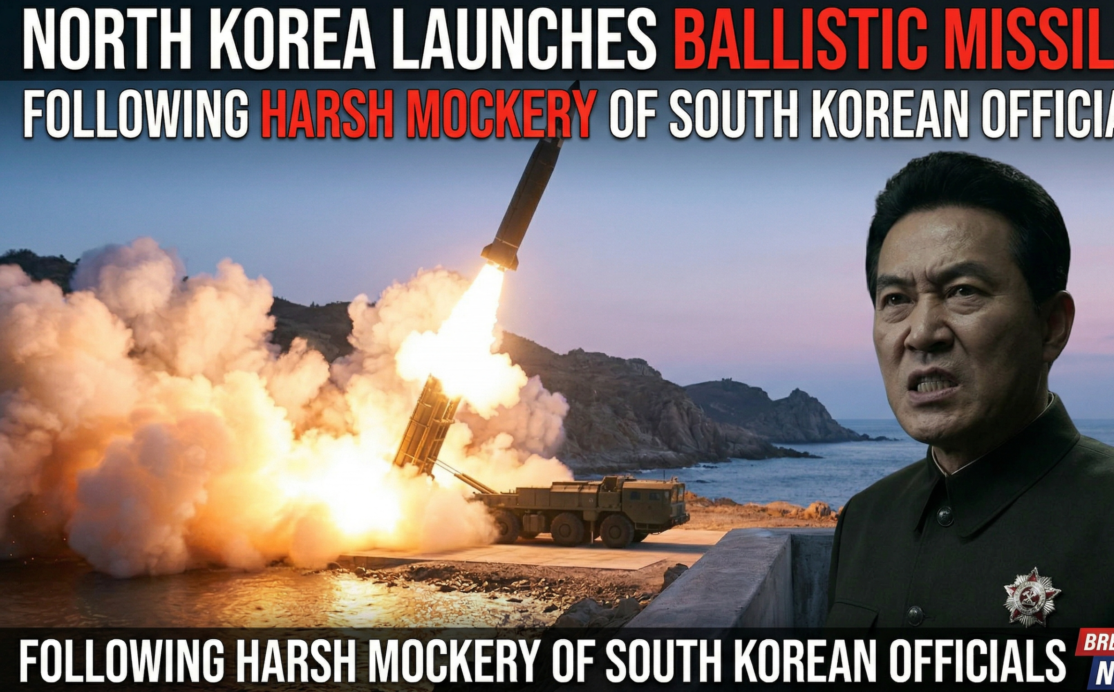
The geopolitical situation across the Korean Peninsula has abruptly entered a highly volatile and incredibly dangerous new phase.
In a sudden and highly aggressive display of sheer military dominance, North Korea has fired multiple ballistic missiles directly into the eastern waters.
This aggressive and unprovoked military posturing has immediately extinguished any lingering hopes for a peaceful diplomatic resolution in the region.
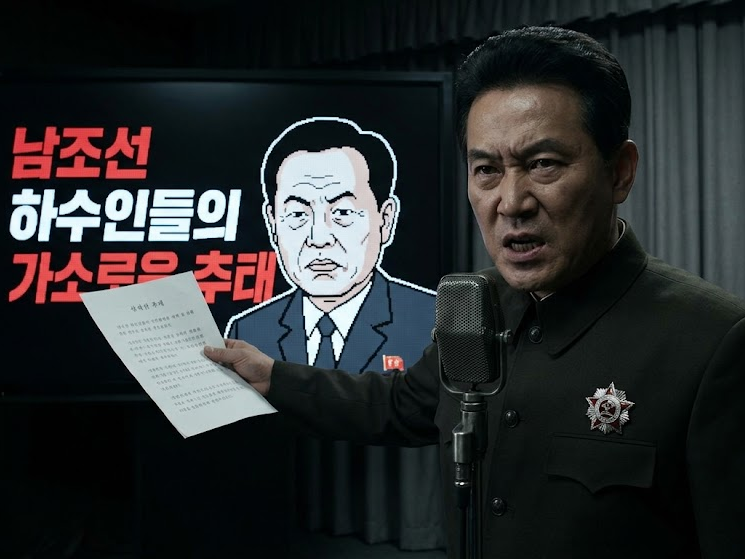
This sudden military escalation took place mere hours after a prominent North Korean official launched a vicious verbal attack against the South Korean government.
During this aggressive rhetorical assault, the official infamously mocked South Korean leaders as world-startling fools for believing in the possibility of improved bilateral relations.
This startling development completely shatters the fragile optimism that had only recently begun to emerge within the political corridors of Seoul.
South Korean officials had previously noted rare and seemingly conciliatory remarks emanating from Pyongyang regarding recent border incidents involving civilian drones.
However, these back-to-back missile launches prove that the apparent diplomatic thaw was nothing more than a calculated illusion designed to deceive neighboring nations.
When coupled with the sudden and harsh rhetorical pivot from top North Korean diplomats, the deeply entrenched hostility of the regime becomes undeniably clear.
The current inter-Korean relationship is completely characterized by an unwavering commitment to military aggression over any form of peaceful negotiation.
As the ruling regime in North Korea continues to prioritize the rapid expansion of its strategic military arsenal, the entire East Asian region remains on a terrifying edge.
This comprehensive and search engine optimized analysis will explore the intricate and highly complex details surrounding these recent ballistic missile launches.
We will delve deeply into the specific historical context behind the brutal diplomatic insults hurled across the heavily fortified border.
Furthermore, we will examine the underlying political strategies currently being employed by the isolated Kim Jong Un regime.
Ultimately, this article will decode exactly what this renewed hostility means for the long-term future of global security and regional stability.
The Sudden Military Escalation and Missile Salvo
The official state policy of North Korea relies heavily on prioritizing raw military strength over traditional diplomatic engagement.
This aggressive ideology was placed on full global display as the isolated regime flawlessly executed a series of completely unannounced weapons tests.
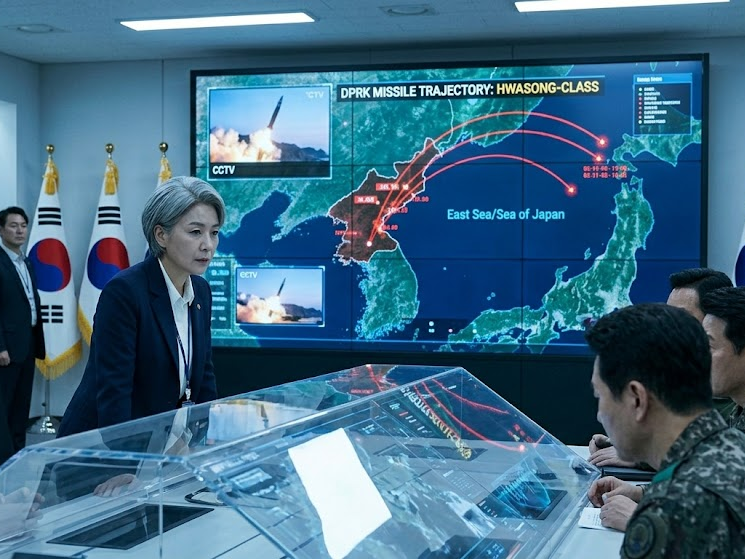
According to official intelligence reports released by the South Korean Joint Chiefs of Staff, the military detected multiple anomalous radar signatures.
These signatures were quickly identified as multiple short-range ballistic missiles aggressively lifting off from North Korea’s eastern coastal Wonsan area.
This highly provocative military action occurred during the very early hours of Wednesday morning, catching many international observers completely off guard.
The initial and highly coordinated volley of short-range ballistic weapons flew a calculated distance of approximately two hundred and forty kilometers.
After completing their predetermined flight paths, these dangerous projectiles splashed down violently into the eastern waters off the Korean coast.
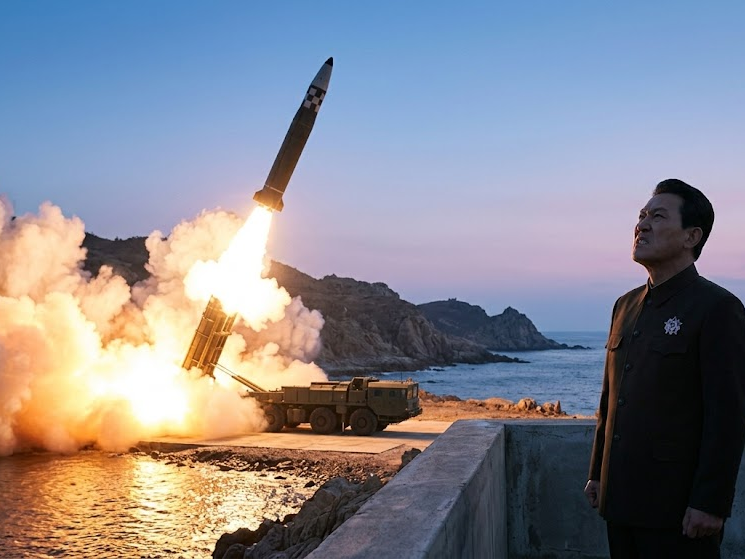
However, the deliberate military provocations orchestrated by Pyongyang certainly did not end with that initial morning salvo.
Later that exact same Wednesday, an additional and much more powerful North Korean ballistic missile was fired into the sky.
This specific weapon was designed to travel a significantly longer distance of more than seven hundred kilometers off the eastern coastline.
The Japanese Defense Ministry was actively and closely monitoring this highly volatile situation using advanced tracking radar systems.
Japanese military officials confidently assessed that this longer-range missile eventually fell into open waters situated just outside Japan’s exclusive economic zone.
These highly disruptive launches closely followed an earlier, highly suspicious incident that occurred on the preceding Tuesday.
During that event, an unidentified and highly suspicious projectile was launched directly from the North’s heavily guarded capital region of Pyongyang.
This particular projectile reportedly vanished entirely from South Korean military tracking radars shortly after its initial liftoff sequence.
Respected military analysts and prominent South Korean media outlets strongly suggest that this anomaly was likely a malfunctioning ballistic missile.
It is widely believed that the weapon experienced a catastrophic abnormal development and subsequently failed during its highly critical initial launch stage.
The United States Indo-Pacific Command quickly issued a formal public statement to clarify the severity of these alarming military events.
The military command clearly stated that while these back-to-back North Korean launches are highly concerning, they highlight the destabilizing impact of the regime’s illicit weapons program.
They also firmly clarified that these specific tests did not pose an immediate or direct threat to United States personnel, sovereign territory, or its vital regional allies.
Nevertheless, the South Korean military establishment currently remains on an incredibly high and uncompromising state of alert.
They are actively maintaining a steadfast and highly visible readiness to repel any further military provocations from their northern neighbor.
This readiness is heavily supported by their historically ironclad and deeply integrated military alliance with the United States Armed Forces.
These completely unannounced weapons tests remain a core and highly predictable element of Pyongyang’s overarching strategy to project raw power.
They actively use these launches to test new technical capabilities, deter perceived foreign threats, and keep neighboring adversaries strictly off balance.
The Brutal Rhetorical Assault on South Korea
To completely and fully understand the sheer gravity of these sudden missile launches, one must first examine the fierce verbal barrage that preceded them.
The physical deployment of advanced weapons served merely as the explosive exclamation point on a highly aggressive psychological offensive.
This offensive was specifically and deliberately aimed at humiliating the South Korean government on the international diplomatic stage.
The underlying hostility directly stemmed from South Korea’s somewhat hopeful reaction to a rare public statement issued by Kim Yo Jong.
Kim Yo Jong is widely recognized as the highly influential and deeply powerful sister of the supreme North Korean leader.
Following an incident where the South Korean President expressed official regret over alleged civilian drone flights crossing into North Korean airspace, she reacted surprisingly.
She publicly and incredibly surprisingly praised the South Korean leader for demonstrating what she termed as honesty and courage.
The South Korean government has been incredibly eager for any kind of meaningful breakthrough in the long-dormant inter-Korean diplomatic relations.
Consequently, South Korean officials immediately and enthusiastically interpreted her surprisingly mild remarks as a genuine diplomatic olive branch.
They even took the optimistic step of publicly describing this brief exchange as representing highly meaningful progress for the divided peninsula.
Pyongyang, however, quickly and absolutely brutally shut down this growing sense of optimism with a crushing dose of political reality.
Jang Kum Chol, who serves as the first vice minister at Pyongyang’s Foreign Ministry, released a highly vitriolic and aggressive public statement.
His statement was specifically designed to forcefully clarify that Kim Yo Jong’s previous words were strictly meant as a severe warning.
He made it absolutely and undeniably clear that her statement was never intended to be interpreted as an invitation for lasting peace.
Jang mercilessly and publicly derided all optimistic South Korean officials by officially labeling them as world-startling fools.
He aggressively accused the entire southern political establishment of being deeply engaged in highly delusional and pathetic wishful thinking.
By strongly and firmly reaffirming a highly uncompromising hardline stance, he loudly declared that South Korea would always remain an enemy.
He explicitly stated that the southern nation would forever be considered North Korea’s absolute most hostile and dangerous enemy state.
Furthermore, he went out of his way to quote Kim Yo Jong using incredibly colorful and highly offensive metaphorical language.
He quoted her directly comparing South Korean politicians to diseased dogs affected by mange that blindly bark to the tune of neighboring dogs.
This particularly crude and highly publicized insult was not merely random name-calling by the isolated political regime.
It was a highly calculated and direct retaliation against Seoul for their recent participation in international diplomatic arenas.
South Korea had recently co-sponsored a highly critical United Nations resolution that officially condemned North Korea’s purported and systematic human rights violations.
By publicly and viciously mocking Seoul’s earnest diplomatic overtures, Pyongyang successfully sent a crystal-clear message to the entire world.
The regime has absolutely zero genuine interest in participating in any form of diplomatic engagement on South Korea’s specific terms.
The Deceptive Strategy Behind the Provocations
The highly calculated sequence of these recent events highlights a classic and heavily utilized North Korean psychological warfare tactic.
Starting with a mildly positive statement from one official and following it with vicious insults and missile launches from others is entirely deliberate.
Geopolitical analysts and international relations experts frequently observe this specific dynamic occurring within the secretive North Korean regime.
By occasionally and strategically issuing statements that can be optimistically interpreted as conciliatory, Pyongyang effectively tests the diplomatic waters.
They use these fleeting moments to accurately gauge exactly how desperate the South Korean government currently is for meaningful dialogue.
When South Korea eagerly and publicly responds to the bait, hardline military officials quickly and aggressively pivot straight back to unprovoked hostility.
They gleefully and publicly slap away the extended olive branch, leaving the international diplomatic community completely bewildered and frustrated.
This highly calculated and deeply intentional political unpredictability serves several highly specific and crucial purposes for the ruling dictatorship.
Firstly, it serves as an incredibly powerful tool for domestic propaganda designed to control the local civilian population.
It actively portrays the North Korean leadership as incredibly strong, highly dominant, and completely unyielding to foreign pressures.
Simultaneously, it purposefully frames the South Korean government as inherently weak, desperate, and overly eager to appease their northern masters.
Secondly, this strategy provides the isolated regime with an immense amount of invaluable diplomatic leverage on the world stage.
It allows Pyongyang to completely and entirely dictate the overall tempo and direction of all future inter-Korean relations.
This dynamic ensures that any potential future peace talks would only ever happen under conditions that are highly favorable to the North.
Finally, this manufactured political drama often provides a highly convenient and incredibly effective smokescreen for their military operations.
It actively allows the secretive regime to continuously advance its illegal ballistic missile and underground nuclear weapons programs without immediate interference.
While the international community is busy attempting to decipher the confusing political rhetoric, North Korean engineers are quietly perfecting their deadly arsenals.
The Dangerous Advancements in Military Technology
While the highly offensive diplomatic insults naturally grab international media headlines, the true underlying threat is entirely technological.
North Korea is currently engaged in a rapidly advancing and highly accelerated campaign to drastically modernize its military capabilities.
The recent barrage of short-range and extended-range ballistic missiles is merely a small part of this much broader strategic initiative.
Earlier in the same week, North Korean state media outlets proudly and highly enthusiastically announced a major technological breakthrough.
They claimed that supreme leader Kim Jong Un had personally and carefully observed the highly successful test of a newly upgraded solid-fuel engine.
This specific and highly advanced engine design is explicitly intended for use in their intermediate and intercontinental ballistic weapon systems.
The successful implementation of this new technology represents a truly monumental and highly dangerous shift in the regime’s overall military capabilities.
Historically, the North Korean military apparatus relied almost entirely and heavily on highly volatile liquid-fuel missile technology.
These older liquid-fueled weapons are highly vulnerable to preemptive strikes because of their incredibly complex logistical requirements.
They must be carefully and slowly fueled immediately prior to liftoff, which is an incredibly time-consuming and dangerous operational process.
This lengthy fueling procedure can easily and quickly be detected by advanced United States and South Korean surveillance satellites orbiting above.
This critical detection window successfully allows allied military forces ample time to launch devastating preemptive strikes before the missile ever leaves the launchpad.
In stark contrast, modern solid-fuel missiles have their chemical propellants built directly and permanently into the physical airframe during manufacturing.
This highly advanced technological design makes these weapons incredibly easier to effectively conceal from orbiting spy satellites and high-altitude drones.
They can be successfully hidden deep inside fortified mountain bunkers or moved swiftly across the country on mobile transporter erector launchers.
Furthermore, these solid-fuel systems are incredibly quicker to successfully launch during a highly tense military crisis.
They require almost absolutely zero preparation time, which drastically and dangerously reduces the available early warning window.
This lack of warning heavily compromises the effectiveness of highly advanced allied missile defense systems deployed across the region.
The South Korean spy agency recently conducted a highly classified briefing for concerned national lawmakers regarding this exact issue.
They indicated that this new solid-fuel engine test is highly likely tied directly to Pyongyang’s ultimate and most dangerous military ambition.
The regime desperately wishes to develop a highly reliable solid-fuel intercontinental ballistic missile capable of striking the United States homeland.
They want this massive weapon to be fully capable of successfully carrying multiple independent nuclear warheads simultaneously.
While many global defense experts currently remain somewhat skeptical that North Korea has fully mastered this complex reentry technology, the threat remains.
The relentless and highly aggressive pace of their ongoing weapons testing indicates a very clear and undeniable military intent.
They actively intend to eventually overwhelm and completely penetrate all existing United States homeland missile defense systems in the near future.
The Shifting Landscape of Global Geopolitics
The current wave of extreme hostility occurring on the Korean Peninsula absolutely cannot be accurately viewed in a total geopolitical vacuum.
North Korea’s aggressive willingness to brazenly fire missiles and openly hurl insults at its southern neighbor is deeply rooted in global shifts.
The regime is actively capitalizing on the rapidly shifting and highly unstable sands of modern global geopolitics to secure its survival.
Ever since the highly publicized and dramatic collapse of nuclear diplomacy in the year 2019, the situation has rapidly deteriorated.
Following the failed summit between Kim Jong Un and President Donald Trump in Hanoi, North Korea has steadfastly refused further negotiations.
The paranoid regime ultimately concluded that Washington would absolutely never offer the comprehensive economic sanctions relief it desperately desired.
They realized that this relief would never be granted in exchange for merely partial or unverified denuclearization efforts.
Consequently, Kim Jong Un officially and aggressively ordered a massive, unchecked expansion of the country’s nuclear and conventional missile arsenals.
To successfully shield itself from any severe international legal repercussions, North Korea has highly strategically pivoted its foreign policy.
They have actively moved toward strengthening ties with traditional historical allies who are currently embroiled in their own severe confrontations.
Specifically, they have heavily aligned themselves with the powerful governments of Russia and China to counter United States influence.
North Korean state media recently and proudly confirmed that Chinese Foreign Minister Wang Yi is officially scheduled to visit Pyongyang.
This highly anticipated two-day diplomatic trip deeply underscores the rapidly deepening economic and political ties existing between the two socialist nations.
Furthermore, Kim Jong Un even previously traveled to Beijing to proudly attend a massive military parade alongside Chinese President Xi Jinping.
Simultaneously, amid the ongoing and highly destructive conflict currently raging in Ukraine, North Korea has found a highly willing partner in Moscow.
The isolated regime is allegedly supplying massive quantities of conventional artillery munitions to the Russian military apparatus.
In direct exchange for these weapons, they are reportedly receiving highly advanced aerospace and sensitive military technology from the Russian government.
Because both Russia and China currently hold highly powerful permanent veto power on the United Nations Security Council, the dynamic has changed.
North Korea now knows with absolute certainty that it can successfully launch ballistic missiles with near total international impunity.
The previous historical days of unanimous and highly restrictive United Nations sanctions against Pyongyang are now effectively and permanently over.
This new geopolitical reality has completely emboldened the dictatorial regime to act highly aggressively without any real fear of further economic strangulation.
The Psychological Impact on the South Korean Public
For the millions of ordinary, hard-working citizens residing in South Korea, this relentless cycle of military provocations is exhausting.
It continuously triggers a highly familiar but incredibly draining sense of deep anxiety and lingering national insecurity.
Following the highly aggressive Wonsan missile launches, the atmosphere in major southern cities immediately became tense and fearful.
Massive television screens located in busy Seoul subway stations, public city squares, and crowded international airports broadcasted the terrifying news.
These screens continuously looped highly ominous file footage showing massive North Korean missiles aggressively ascending into the bright sky.
While South Korean citizens have bravely lived under the dark shadow of their unpredictable northern neighbor for many long decades, the pain remains.
The complete and utter dismissal of their President’s genuine diplomatic overtures is a highly bitter and deeply disappointing pill to swallow.
It constantly and painfully reinforces the very grim reality regarding the true nature of the heavily armed peninsula.
It proves that despite any positive changes in democratic leadership and progressive policy in Seoul, the fundamental threat remains completely unchanged.
The deeply hostile and inherently aggressive nature of the Kim regime remains an immovable and highly dangerous permanent fixture.
The South Korean government must now carefully and strategically navigate a highly volatile, completely unpredictable, and incredibly dangerous regional security landscape.
They must do this while knowing that any fleeting glimmers of diplomatic engagement will always be instantly overshadowed by entrenched confrontation.
They face an enemy entirely focused on hypersonic weapons development and the absolute total subjugation of the entire Korean Peninsula.
Conclusion
The highly dramatic military and diplomatic events of this month serve as a stark, undeniable reminder of an ongoing crisis.
They highlight the deeply intractable and incredibly complex nature of the Korean Peninsula’s permanent security crisis.
North Korea’s sudden and aggressive decision to fire a massive barrage of ballistic missiles is a clear message to the world.
Executing this launch immediately after publicly and viciously mocking South Korea as world-startling fools is a masterclass in aggressive diplomatic theater.
It highly successfully and deliberately extinguished Seoul’s fragile, newly formed hopes for a meaningful and lasting diplomatic thaw.
Furthermore, it effectively projected an image of uncompromising, highly aggressive domestic strength to the heavily oppressed North Korean population.
Most dangerously, it provided the perfect international cover for the rapid, unchecked advancement of highly dangerous solid-fuel missile technologies.
As Pyongyang continuously and aggressively leverages its rapidly tightening international alliances with both Beijing and Moscow, the world watches nervously.
They use these powerful alliances specifically to effectively and permanently evade all existing international economic and military sanctions.
Consequently, the realistic prospect of any meaningful, peaceful dialogue currently remains incredibly remote and highly unlikely in the near future.
For the allied governments of the United States and South Korea, the difficult path forward requires an unwavering, absolute commitment.
They must maintain an incredible level of high military readiness and actively deploy powerful deterrence strategies across the entire region.
They must do this while fully acknowledging that the Kim regime currently views international diplomacy not as a tool for peace, but as a weapon.
They view all diplomatic engagement strictly as a highly deceptive weapon of manipulation designed to ensure their own aggressive survival.
FAQs
Q1. Why exactly did North Korea publicly call South Korea world-startling fools in their official state media broadcast?
North Korean political officials intentionally and highly aggressively used the insulting phrase world-startling fools to brutally mock the southern government.
They specifically wanted to publicly humiliate South Korea’s growing and highly genuine optimism regarding the possibility of improved inter-Korean relations.
Q2. What specific kind of advanced ballistic missiles did North Korea launch during this recent and highly aggressive military escalation?
During this highly volatile military event, North Korea aggressively launched multiple short-range ballistic missiles directly from its eastern coastal Wonsan area.
These specific short-range weapons flew an approximate, calculated distance of exactly two hundred and forty kilometers before crashing into the ocean.
Q3. How exactly are the governments of South Korea and the United States officially responding to these dangerous, unprovoked missile launches?
The allied governments of South Korea and the United States are currently maintaining an incredibly high state of advanced military readiness.
The South Korean Joint Chiefs of Staff actively and successfully tracked all the recent launches using highly advanced military radar systems.