
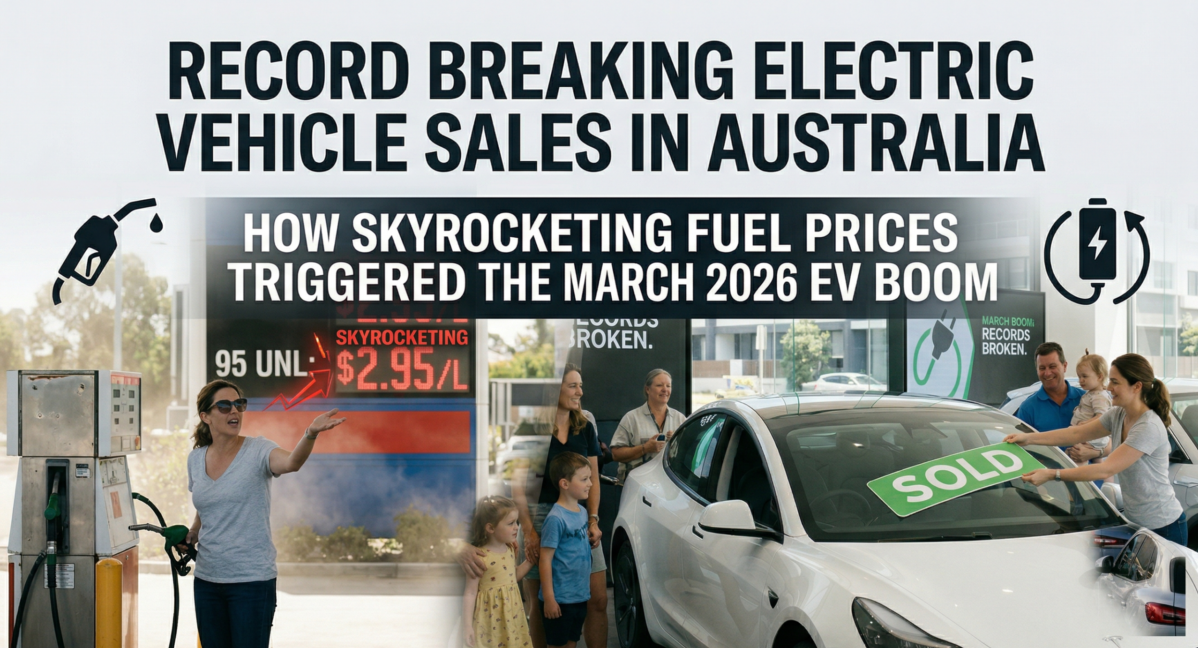
The automotive landscape across Australia is currently witnessing an unprecedented and completely irreversible transformation.
Record breaking electric vehicle sales have completely redefined modern consumer purchasing habits during the historic month of March 2026.
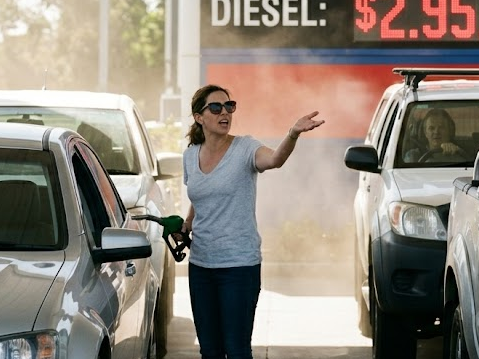
This monumental, highly visible transition is taking place amidst a highly volatile climate of intense fuel security fears and continuously skyrocketing petrol prices.
Ongoing global geopolitical instability, particularly the severe and seemingly endless conflict in the Middle East, has critically wounded the domestic fuel supply chain.
As the retail price of heavy diesel fuel aggressively surges well beyond the terrifying three-dollar mark per litre, everyday Australian motorists are desperately seeking highly affordable alternatives.
Consequently, the battery-powered automotive market has absolutely and undeniably shattered all previous historical sales records across the entire island nation.
This highly comprehensive and heavily SEO-optimized article will thoroughly explore exactly how and why Australian drivers are aggressively abandoning traditional combustion engines at such a historic, unprecedented rate.
We will deeply and analytically explore the very latest national sales statistics, the massive market impact of highly affordable new models, and what this ultimately means for the long-term future of domestic transport.
The Historic March 2026 Automotive Sales Record
The Federal Chamber of Automotive Industries has officially released its highly anticipated and deeply revealing national vehicle sales data for the month of March 2026.
These official, highly scrutinized government-backed figures paint a remarkably clear, undeniably vivid picture of a modern nation eagerly embracing sustainable electric mobility.
An absolutely staggering, record-breaking total of 15,839 pure battery electric vehicles were successfully and officially delivered directly to Australian customers in a single calendar month.
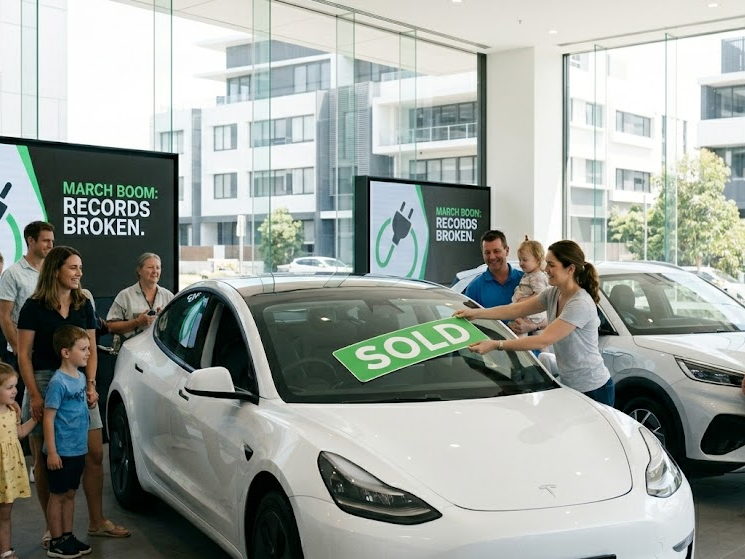
This massive, entirely unprecedented volume represents a highly significant 14.6 per cent share of the entire, highly competitive national new vehicle market.
To properly put this incredible, rapid market growth into a highly accurate perspective, we must look at the past.
Electric vehicles accounted for a mere 7.5 per cent of total national sales during the exact same month of March in the year 2025.
This mathematical reality clearly means that the overall market share for zero-emission passenger vehicles has effectively and dramatically doubled year-on-year in an astonishingly short, highly condensed timeframe.
Furthermore, the mainstream popularity of highly versatile plug-in hybrid electric vehicles also experienced a massive, highly notable surge across the entire country.
These versatile hybrid models successfully and quietly added another 8,215 individual units to the highly impressive national sales tally.
When these specific numbers are mathematically combined together, battery-powered and plug-in hybrid cars made up nearly twenty-three per cent of all brand-new vehicles sold nationwide.
This specific, highly celebrated sales milestone is absolutely historic and completely game-changing for the entire domestic automotive industry.
It officially and undeniably means that one in every five brand-new cars leaving Australian dealership lots today features a modern electric charging port.
Severe Fuel Security Fears and Soaring Bowser Costs
The absolute primary, undeniable catalyst heavily driving this sudden, massive consumer shift is the current, highly unstable global geopolitical climate.
Severe, escalating military conflict and ongoing, highly unpredictable political instability throughout the Middle East have deeply and violently disrupted traditional global oil markets.
Australia heavily and dangerously relies on massively imported, highly refined petroleum products to keep its massive domestic economy moving forward.
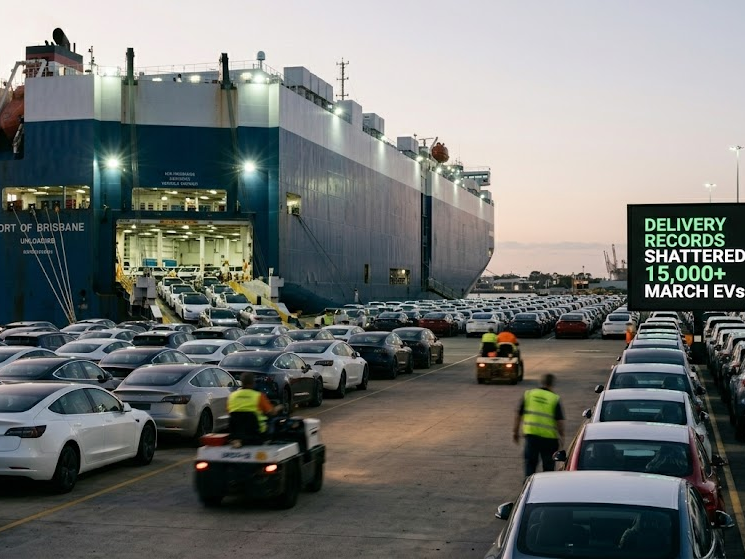
This heavy, unavoidable reliance makes the domestic transportation market incredibly, terrifyingly vulnerable to these unpredictable overseas supply chain shocks and massive price hikes.
Highly stressed, financially burdened consumers are actively and helplessly watching daily retail fuel prices climb to highly unsustainable, absolute record-breaking levels.
Diesel fuel, a highly critical staple for many massive Australian transport industries and large regional families, is now frequently exceeding three dollars per litre at local neighborhood service stations.
These terrifying, highly restrictive global economic conditions have actively sparked widespread, highly vocal national anxiety regarding long-term domestic fuel security.
They have also instantly created massive, daily financial stress regarding basic daily commuting affordability for the average, hardworking Australian employee.
For many hardworking, budget-conscious Australian households, operating the traditional, heavy petrol or diesel vehicle is rapidly becoming an absolutely unbearable, highly toxic financial burden.
This severe, inescapable, and highly crushing economic pressure has fundamentally and aggressively forced hesitant, stubborn buyers to finally embrace modern electric battery technology.
Tony Weber, the highly respected and deeply experienced chief executive of the Federal Chamber of Automotive Industries, publicly acknowledged this distinct, massive market disruption.
He explicitly, clearly, and publicly noted that consumers are actively considering electric alternatives primarily due to the severe, ongoing, and highly terrifying disruptions in foreign fuel supply.
The Rapid, Undeniable Decline of Petrol and Diesel Vehicles
While the modern, highly advanced electric vehicle sector is currently experiencing a massive, highly celebrated public boom, the broader automotive market is currently softening.
Overall new vehicle sales across the entire country in the month of March 2026 totalled exactly 105,058 individual units.
This specific, highly tracked total number actually represents a highly notable 3.3 per cent decline when directly compared to the exact same reporting period last year.
However, the specific, highly detailed sales numbers for traditional internal combustion engine vehicles tell an even more dramatic, highly revealing, and deeply impactful story.
Sales of traditional, fossil-fuel-powered passenger vehicles and large family SUVs plummeted by an incredibly alarming, highly significant 20.8 per cent during the month of March.
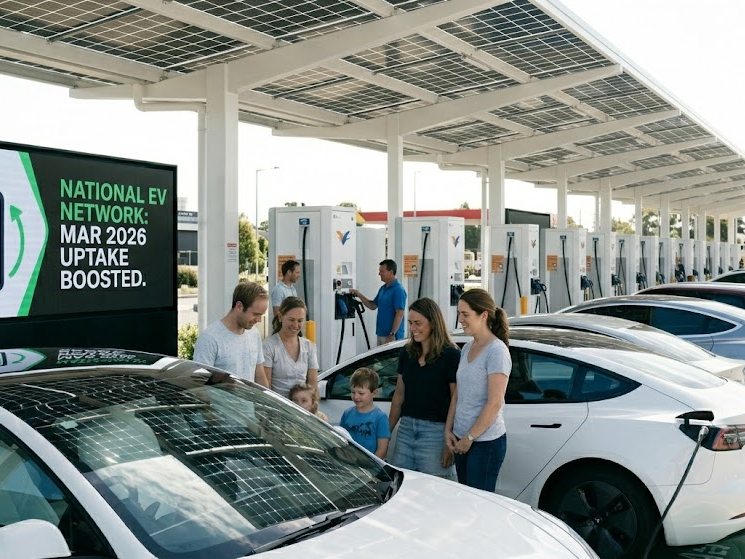
Similarly, the overall consumer demand for heavily polluting, highly taxed diesel-powered vehicles dropped significantly and undeniably across the board.
National diesel vehicle sales officially fell by a massive, highly concerning 10.1 per cent when compared directly to the exact same calendar period in the year 2025.
This massive, highly noticeable sales downturn clearly and undeniably indicates a major, highly permanent shift in public consumer psychology and buying habits.
It heavily proves that everyday Australian consumers are actively, intentionally, and highly aggressively turning their backs on highly polluting, incredibly expensive traditional fuel formats.
The glorious, highly carefree days of blindly purchasing a massive gas-guzzling vehicle without carefully considering the long-term running costs are officially and entirely over.
Automotive dealerships strategically located across the entire country are physically witnessing this severe, highly permanent shift in consumer sentiment on a daily basis.
James Voortman, the highly experienced and highly vocal chief executive of the Australian Automotive Dealer Association, has publicly weighed in on this massive trend.
He officially and firmly confirmed that constantly rising, highly unpredictable fuel prices are heavily, undeniably accelerating modern buyer decisions away from traditional combustion engines.
The Game-Changing Arrival of Truly Affordable Electric Cars
Another massive, absolutely critical contributing factor to this record-breaking sales month is a massive, highly welcomed shift in vehicle pricing structures.
The domestic Australian market is currently experiencing a sudden, massive influx of highly affordable, incredibly high-quality electric vehicles imported from overseas.
Historically speaking, highly advanced battery-powered cars were widely and correctly considered highly expensive luxury items by the general public.
They were highly expensive financial assets reserved entirely for wealthy early adopters, highly affluent professionals, and passionate, wealthy technology enthusiasts.
However, the highly competitive Australian automotive market has recently welcomed a massive, highly disruptive wave of budget-friendly electric hatchbacks and small compact SUVs.
For the very first time in the nation’s long history, everyday Australian drivers can comfortably and easily purchase a brand-new electric car for under thirty thousand dollars.
The highly popular, incredibly well-equipped BYD Atto 1 has officially and proudly become Australia’s absolute most affordable electric passenger vehicle.
This highly attractive, modern vehicle is currently priced aggressively from approximately twenty-seven thousand dollars drive-away, making it highly accessible to the masses.
Other highly aggressive, globally massive automotive manufacturers are closely and eagerly following suit to rapidly capture this massive, highly lucrative entry-level market segment.
The highly stylish, incredibly futuristic GAC Aion UT recently launched locally with an incredibly competitive, highly disruptive drive-away price tag.
It aggressively entered the local market sitting at just under thirty-one thousand dollars, instantly turning heads across the entire industry.
Similarly, the widely acclaimed, highly award-winning MG4 EV Urban is currently arriving at local dealerships with a highly attractive, deeply discounted price point.
It is currently being aggressively sold to consumers for exactly thirty-one thousand nine hundred and ninety dollars.
These incredibly low, highly subsidized, and deeply competitive prices put zero-emission vehicles in direct, fierce financial competition with traditional light petrol hatchbacks.
By completely and aggressively removing the massive, highly restrictive financial barrier to entry, these automotive brands have succeeded immensely.
They have successfully and permanently unlocked a massive, entirely new demographic of highly eager, deeply budget-conscious vehicle buyers.
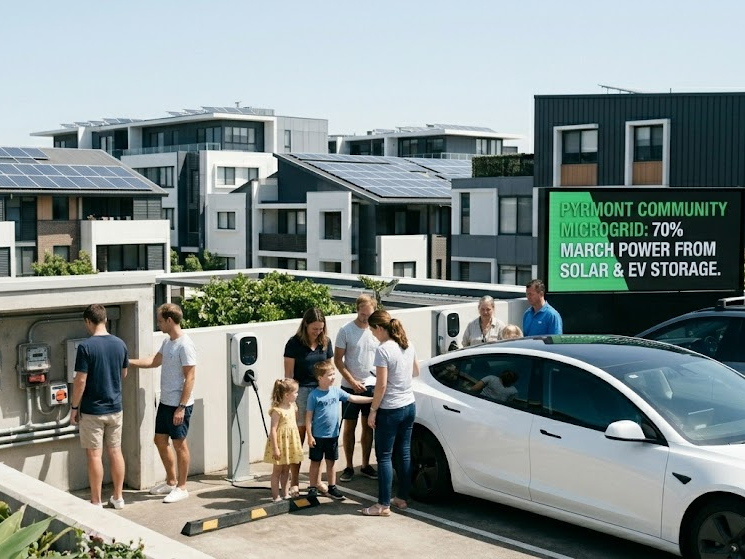
BYD and Tesla Actively Dominate the Modern Market
The historic, completely unprecedented March 2026 sales figures have also completely and utterly reshuffled the traditional manufacturer leaderboard in Australia.
While the massive, highly historic legacy brand Toyota barely managed to retain its overall top sales position, its absolute dominance is rapidly fading.
It is currently being heavily, aggressively, and constantly challenged by entirely new, highly innovative corporate players.
The massive Chinese automotive giant BYD has achieved an absolutely incredible, highly historic, and deeply impressive sales milestone.
They have successfully and officially secured the highly coveted third overall spot in national vehicle sales across all vehicle categories.
BYD successfully and efficiently delivered an astonishing 7,217 brand-new vehicles to customers during the busy month of March.
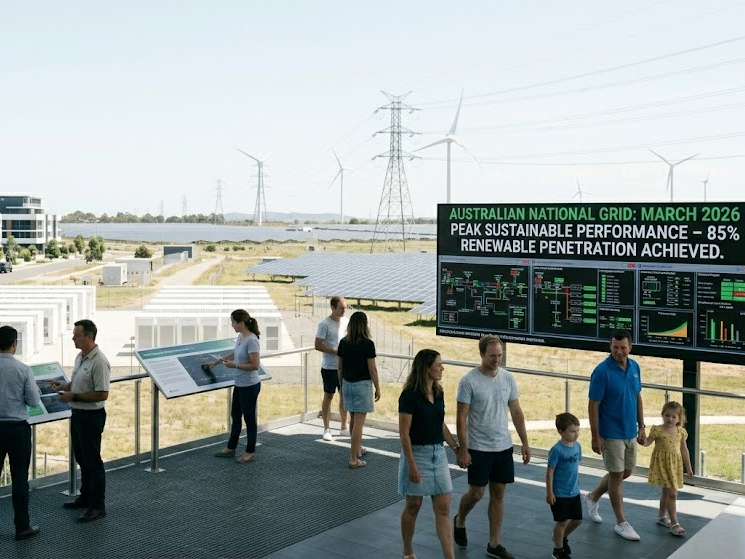
This highly impressive achievement means they completely outperformed deeply established, historic legacy brands like Mazda and Ford.
This massive corporate success is heavily driven by the phenomenal, absolute runaway popularity of the highly advanced new BYD Sealion 7 model.
This specific, highly praised electric vehicle recently broke directly into the highly prestigious top ten most popular models sold in the country.
Meanwhile, the highly famous American electric pioneer Tesla continues to successfully and effortlessly capture a massive portion of the Australian premium market.
The highly versatile, incredibly popular Tesla Model Y impressively and undeniably ranked as Australia’s third best-selling vehicle overall.
This specific ranking is incredibly impressive because it includes all fuel types, not just electric vehicles, during the highly competitive month of March.
Tesla successfully and highly efficiently delivered nearly three thousand five hundred premium vehicles during the calendar month.
This strongly proves they are firmly maintaining their massive, highly dedicated cult following and premium market dominance.
The combined, highly aggressive sales strategies of BYD and Tesla are fundamentally and permanently changing the local industry landscape.
They are aggressively forcing traditional, highly slow-moving legacy automakers to rapidly accelerate their own internal, highly expensive electrification plans.
If legacy brands fail to urgently deliver highly compelling, highly affordable electric options soon, they face a dark, highly unprofitable future.
They risk permanently, irreversibly losing their massive, historically guaranteed Australian market share to these new, highly agile innovators.
The Massive Financial Boom in Electric Vehicle Financing
The sudden, massive consumer rush toward modern electric mobility is not just highly visible in busy, crowded dealership showrooms.
It is also actively causing a massive, highly notable tidal wave of financial activity within the massive corporate banking sector.
Major financial institutions and highly trusted credit unions across Australia are currently reporting a completely unprecedented financial surge.
They are seeing a massive, highly unusual spike in highly specific electric vehicle car loans and specialized green financing applications.
The Commonwealth Bank of Australia recently revealed some highly shocking, incredibly telling, and deeply detailed internal financial data to the press.
They formally reported that consumer loan applications strictly intended for electric vehicle finance jumped by a staggering 161 per cent since the beginning of March.
This massive, highly undeniable financial data perfectly highlights a highly distinct new economic reality for the nation.
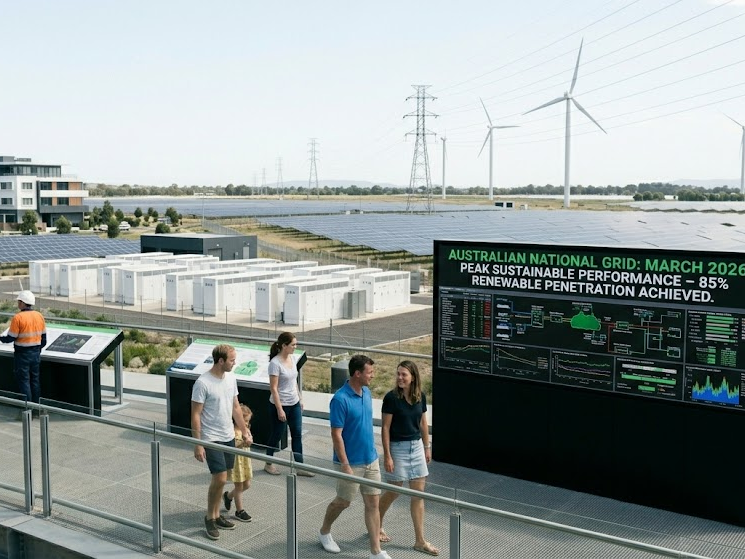
It clearly shows exactly how desperately everyday working Australians are trying to secure battery-powered transport to escape crushing fuel costs.
Furthermore, the booming, massive consumer demand is heavily and rapidly spilling over into the rapidly growing second-hand electric vehicle market.
Dedicated used vehicle trading platforms and online classifieds have reported a massive, highly significant 60 per cent increase in used electric car sales.
This massive, highly tracked jump is calculated when compared directly to the previous month’s overall trading data.
Online internet search traffic explicitly tailored for used electric vehicles has completely and utterly skyrocketed.
It has aggressively jumped by an incredible 163 per cent month-on-month, showing massive, highly sustained public interest.
Interestingly, detailed and highly tracked market data shows that over 80 per cent of these used electric vehicles are actively selling fast.
They are currently selling rapidly for well under the highly accessible, heavily targeted fifty thousand dollar price point.
This highly robust, rapidly expanding secondary market is absolutely crucial for the nation’s highly anticipated future.
It is arguably the absolute only way to successfully ensure that lower-income households can eventually, successfully transition away from highly expensive petrol reliance.
The Highly Urgent Need for Robust Public Charging Infrastructure
Despite the incredibly positive, highly celebrated, and completely record-breaking sales numbers, massive logistical challenges still loom large on the horizon.
A massive, highly complex, and deeply expensive road lies ahead for the Australian automotive industry and local state governments.
The rapid, entirely unprecedented influx of electric vehicles actively entering onto Australian roads is creating a massive physical bottleneck.
It is actively placing massive, highly unsustainable pressure on the existing, heavily fragmented, and deeply underdeveloped public charging networks.
Dedicated industry experts and highly trained engineers are loudly and constantly warning the federal government about this impending crisis.
They clearly state that government financial investment in public charging infrastructure must significantly and immediately increase to properly support this transition.
Federal Chamber of Automotive Industries boss Tony Weber explicitly and passionately stressed this highly important, critical point.
He forcefully made this direct statement during his recent, highly publicized monthly market analysis press conference.
He clearly stated that a truly long-term, highly sustainable national shift to electric vehicles absolutely requires a massive, immediate strategy change.
It heavily requires a much sharper, heavily funded public focus on building highly reliable, universally accessible, and ultra-fast public charging stations.
This massive national infrastructure upgrade is particularly highly critical for vast, highly isolated regional Australian areas.
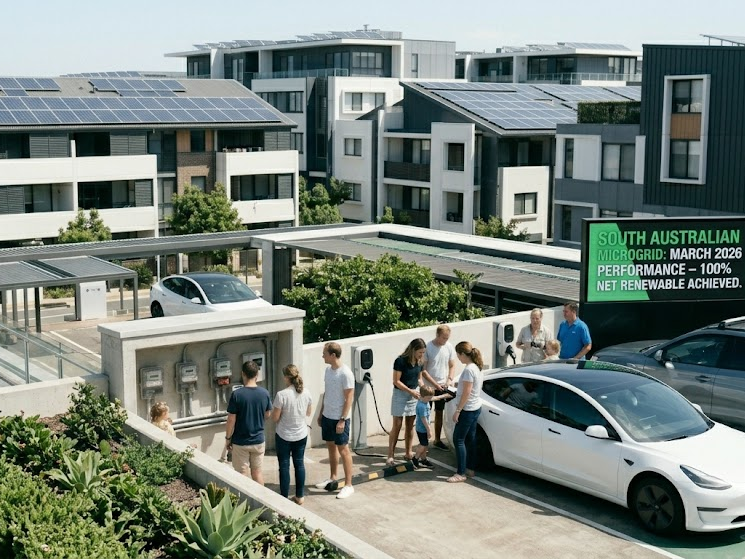
It is also highly essential for dense, highly crowded urban locations where private home driveway charging is completely impossible for high-rise apartment residents.
If the public charging network drastically fails to keep pace with soaring, massive consumer demand, the long-term results could be completely disastrous.
It could severely and permanently stunt future electric vehicle adoption rates across the entire, massive country.
The highly documented psychological fear widely known as range anxiety remains a highly significant, highly valid concern for many.
Long, highly frustrating queuing times at broken, offline, or heavily occupied public chargers remain massive, highly vocal deterrents for potential electric vehicle buyers.
Therefore, massive federal government funding and highly incentivized, deeply protected private corporate investment are urgently required right now.
They are absolutely necessary to successfully and rapidly build out a world-class, highly reliable, and deeply robust nationwide electric charging grid.
The Massive Long Term Economic Impact on Australia
This massive, incredibly rapid national transition toward modern electric mobility carries profound, highly far-reaching financial implications.
It will deeply, fundamentally, and permanently affect the broader, overarching Australian national economy for many decades to come.
For many long, highly expensive decades, billions of hard-earned Australian dollars have constantly and consistently flowed overseas.
This massive, highly detrimental wealth transfer was strictly required to constantly purchase highly expensive, imported refined petroleum products.
By actively, aggressively shifting massive numbers of everyday Australian drivers to locally generated, domestic clean electricity, everything fundamentally changes.
The highly advanced nation can successfully and permanently retain a highly significant, massive portion of that constantly fleeing capital.
This successfully retained, highly valuable national wealth can then be actively and highly beneficially reinvested directly back into the country.
It can heavily fund massive domestic infrastructure upgrades, highly advanced renewable energy projects, and highly localized technological innovation hubs.
Furthermore, the rapidly booming, highly successful electric vehicle sector is actively and organically creating thousands of new, highly desirable jobs.
It is actively generating highly skilled, incredibly well-paying employment opportunities across the entire, massive Australian nation.
The domestic employment landscape is rapidly and necessarily evolving on a massive scale to effectively meet these new, highly complex technological demands.
The automotive industry now desperately requires specialized high-voltage mechanics, highly complex charging infrastructure technicians, and advanced renewable energy engineers.
The Australian federal and state governments must actively, heavily invest in highly specialized educational training programs immediately.
This is the absolute only way to properly and fully prepare the highly eager future young workforce for this rapidly approaching reality.
Failing to properly train local, independent mechanical workshops in modern electric vehicle maintenance could create a massive, highly public disaster.
It could easily and very quickly lead to a massive, highly disruptive mechanical skills shortage in the very near future.
Therefore, the national educational sector must closely, intimately, and highly cooperatively collaborate with massive automotive manufacturers.
They must proactively work together to perfectly and seamlessly align their educational training curriculums with actual, highly demanding modern industry needs.
Conclusion
The historic, highly scrutinized month of March 2026 will absolutely, undoubtedly be remembered as a massive turning point in Australian automotive history.
The highly incredible, completely unprecedented surge in nationwide electric vehicle sales clearly demonstrates a massive societal shift.
It absolutely proves that everyday, hardworking Australians are finally and completely ready to permanently abandon heavily polluting fossil fuels.
This massive shift is driven heavily by severe, completely valid global fuel security fears and highly crippling, record-breaking petrol prices.
Highly stressed consumers are desperately, highly aggressively seeking long-term, highly reliable financial relief from the fuel pump.
The incredibly timely arrival of highly affordable, incredibly high-quality new electric vehicles has perfectly, seamlessly aligned with this massive shift in consumer demand.
Highly innovative brands like BYD and Tesla are completely and utterly rewriting the highly established, traditional automotive rulebook.
They are actively and highly successfully dominating the modern, highly competitive national sales charts.
However, the massive nation must now urgently, highly aggressively focus on rapidly expanding its highly vital public charging infrastructure.
This massive infrastructure project is absolutely critical to properly, highly effectively support these massive waves of new electric drivers.
With continued, highly robust government support and highly impressive ongoing technological advancements, the future is clear.
The future of Australian motoring is undeniably, highly permanently, and completely electric.
Q1. Why did domestic electric vehicle sales suddenly surge so massively in Australia during March 2026?
The massive, highly unprecedented surge in electric vehicle sales was primarily and heavily driven by severe, growing public fears regarding national fuel security.
Ongoing, highly volatile military conflicts in the Middle East severely disrupted global oil supplies and aggressively pushed domestic petrol and diesel prices to highly unaffordable record highs.
Q2. What is the absolute cheapest, brand-new electric vehicle currently available to buy in the Australian market right now?
As of the absolute most current market data, the brand-new, highly popular BYD Atto 1 is officially recognized as the most affordable electric vehicle in the entire country.
This highly popular, incredibly well equipped entry-level electric model is incredibly competitively priced, starting from approximately twenty-seven thousand and ninety-seven dollars drive-away.
Q3. Are highly traditional petrol and diesel car sales completely dropping as electric vehicle popularity rapidly rises?
Yes, the official, highly scrutinized national sales data explicitly and undeniably shows a massive, highly significant decline in the overall purchase of traditional combustion engine vehicles.
During the highly historic month of March, nationwide sales of traditional petrol powered vehicles rapidly plummeted by a massive 20.8 per cent year-on-year.