
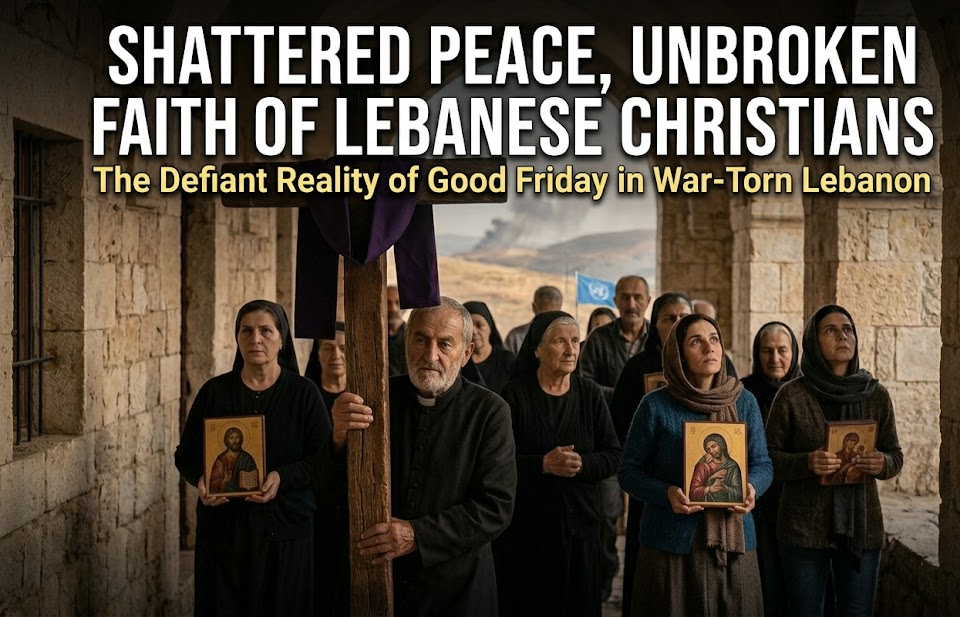
The collision of profound religious devotion and the brutal realities of modern warfare creates a deeply heartbreaking narrative across the Middle East today.
For the Christian population living in Lebanon, the observance of Good Friday has taken on a terrifying and immediate resonance this year.
This sacred day is meant to commemorate the crucifixion of Jesus Christ, serving as a fundamental cornerstone of the entire Christian faith.
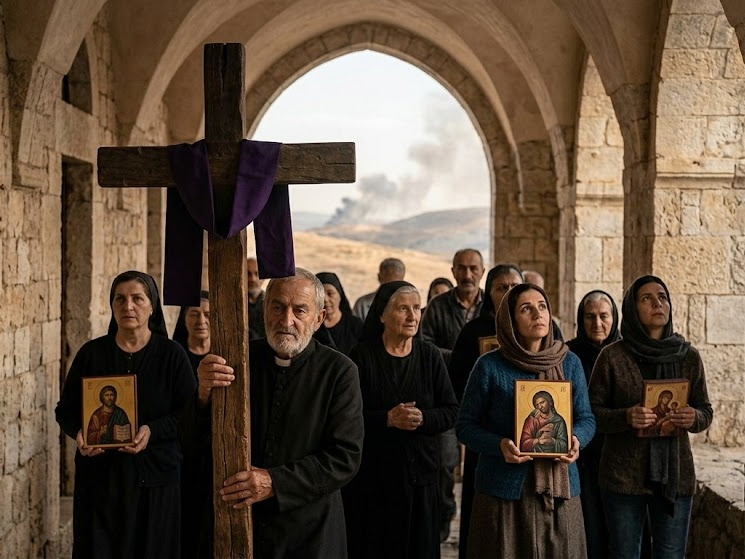
Instead of peaceful reflection, these believers are marking the holy day while artillery fire echoes loudly through their ancestral hills.
The constant buzzing of surveillance drones and the threat of sudden airstrikes have completely overshadowed the traditional solemnity of the Easter season.
Witnessing Christians in Lebanon observe Good Friday under Israeli attacks highlights the incredible resilience, deep sorrow, and unwavering faith of a community caught directly in the crossfire.
This comprehensive article explores the harsh reality facing these faithful individuals as they attempt to honor their religious traditions amidst ongoing border conflicts.
We will deeply analyze the rich historical context of the Lebanese Christian community and how their ancient Holy Week observances have been violently disrupted.
Furthermore, we will examine the devastating physical and psychological impact of the current hostilities tearing through the southern regions of the country.
Ultimately, this is a story of incredible human resilience, highlighting civilians who absolutely refuse to let the terrifying sounds of war silence their sacred prayers.
The Deep Roots: Historical Context of Lebanese Christians
To fully grasp the immense gravity of observing Good Friday in an active conflict zone, one must first understand the deep historical roots of this community.
Unlike many other nations situated in the Middle East, Lebanon boasts a remarkably diverse religious fabric that has existed for centuries.
Christians make up a highly significant and influential portion of the total Lebanese population.
The Christian community in this Mediterranean nation is far from monolithic, comprising several ancient and culturally distinct denominations.
The largest of these groups is the Maronite Catholics, who have fiercely maintained their unique cultural and religious identity in the rugged mountains of Lebanon for over a millennium.
Other significant and historically rooted groups include the Greek Orthodox, the Melkite Greek Catholics, the Armenian Orthodox, and various Protestant denominations.
For countless centuries, these faithful communities have successfully weathered the rise and fall of empires, devastating civil wars, and relentless regional conflicts.
Their enduring presence in the Levant region is deeply and inextricably tied to the very geographical origins of Christianity itself.
Towns and picturesque villages located in southern Lebanon, such as Rmeish, Ain Ebel, Debel, and Alma al-Shaab, have been predominantly Christian enclaves for many generations.
Tragically, today, these exact same historic villages find themselves positioned directly on the dangerous front lines of a modern, devastating military conflict.
Sacred Traditions: The Significance of Good Friday in Lebanese Culture
Good Friday stands as the absolute most solemn and emotionally heavy day of the entire Christian liturgical calendar.
It marks the painful culmination of Holy Week, leading directly up to the joyous celebration of the resurrection on Easter Sunday.
Throughout Lebanon, the day is traditionally marked by intense periods of mourning, strict fasting, and large community gatherings that go far beyond simple church attendance.
Under normal, peaceful circumstances, Good Friday in this region is a highly anticipated day of profound public and private spiritual reflection.
Many Lebanese Christians eagerly partake in the ancient tradition of visiting seven different churches from Holy Thursday night deep into Good Friday.
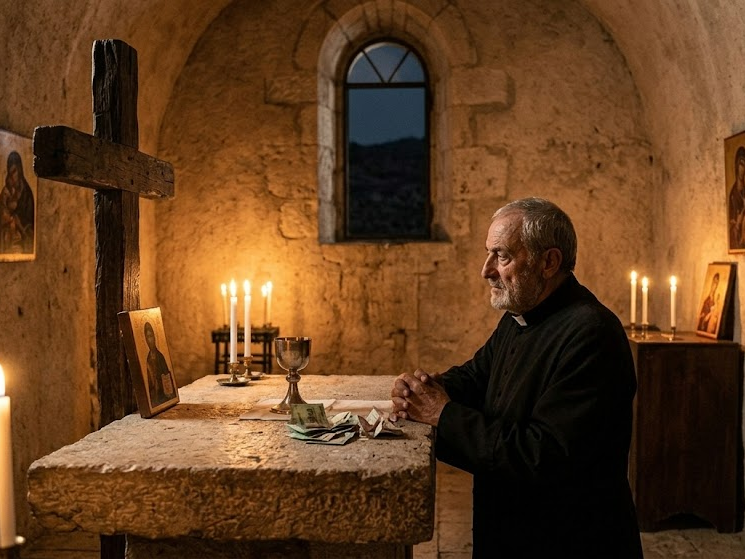
During this pilgrimage, they spend hours praying at the Altar of Repose in a powerful display of communal faith.
Furthermore, communities traditionally organize and execute large, emotional public processions through their neighborhoods.
Devoted worshippers physically carry a massive wooden cross through the winding streets of their villages or major towns.
This physical act is designed to vividly reenact the Passion of the Christ and share the spiritual burden of the crucifixion.
During these events, local churches beautifully echo with ancient Syriac, Arabic, and Greek hymns of intense mourning and sorrow.
Altars are respectfully stripped bare of their grand ornaments, and holy statues are carefully draped in dark black or purple cloth to signify death.
However, the grim reality of observing Good Friday under Israeli attacks has forced these ancient, beloved traditions to rapidly and painfully adapt.
The massive public processions that once proudly filled the streets of southern border towns have been severely restricted for safety reasons.
In many high-risk areas, these outdoor displays of faith have been canceled entirely due to the very real, paralyzing threat of sudden airstrikes and indiscriminate shelling.
The Geopolitical Nightmare: Caught in the Crossfire
The current, terrifying situation facing Lebanese Christians is inextricably linked to the much broader, highly complex geopolitical conflict raging in the region.
This ongoing war primarily involves the military forces of Israel and heavily armed militant groups operating out of Lebanon, most notably Hezbollah.
Since the recent outbreak of intense, escalating hostilities in the region, the official border dividing southern Lebanon and northern Israel has ignited.
This boundary, frequently referred to by international observers as the Blue Line, has tragically transformed into a daily, deadly battleground.
Hezbollah operates as a powerful, Iran-backed Shiite militant group and a highly influential political party within the Lebanese government.
This militant organization frequently launches barrages of rockets and sophisticated anti-tank missiles directly into northern Israeli territories.
In immediate response to these attacks, the Israeli Defense Forces routinely conduct massive retaliatory airstrikes across the border.
These military responses include heavy artillery shelling and targeted drone strikes aimed at destroying Hezbollah infrastructure, eliminating fighters, and dismantling launch sites.
While the core conflict is primarily waged between heavily armed combatants, the specific geography of southern Lebanon guarantees collateral damage.
This geographic reality means that innocent civilian populations are inevitably and unfairly caught right in the middle of the explosive crossfire.
Hezbollah frequently operates within and directly around civilian infrastructure, making towns vulnerable to counter-attacks.
Consequently, Israeli retaliatory strikes have caused widespread, catastrophic destruction in numerous southern Lebanese villages.
For the peaceful Christian villages nestled quietly in these southern hills, this violent war was absolutely not of their own making.
Yet, despite their neutrality, they are being forced to bear a staggeringly heavy physical, emotional, and economic toll.
As Holy Week approaches its climax, the usual comforting sounds of church bells calling the faithful to communal prayer are silenced.
Instead, those sacred bells are frequently drowned out by the terrifying roar of military fighter jets and the bone-rattling thud of heavy artillery.
Faith Under Fire: The Harsh Reality of Today’s Observance
Attempting to observe Good Friday under the constant threat of Israeli attacks requires a level of immense courage that is difficult for outsiders to truly fathom.
The core theological themes of Golgotha, which center around unjust suffering, ultimate sacrifice, and the terrifying feeling of being completely forsaken, resonate deeply today.
For Lebanese Christians navigating this war zone, these ancient biblical themes have taken on an alarming, literal clarity in their daily lives.
In heavily targeted villages like Rmeish and Alma al-Shaab, the ever-present threat of incoming lethal fire has drastically altered all Holy Week schedules.
Large outdoor processions, which have always been a vibrant staple of Lebanese Good Friday traditions, currently present far too much of a target for military strikes.
Consequently, all major religious gatherings are being urgently moved indoors to prioritize the physical safety of the congregation.
Worshippers now huddle in reinforced church basements or heavily fortified community centers rather than walking proudly in the open sunlight.
Nighttime prayer vigils, once a beautiful hallmark of the season, have been largely abandoned in the hardest-hit border areas.
Church services are now held very quickly during daylight hours when clear visibility might offer a slight, albeit incredibly fragile, sense of security.
Priests delivering their emotional homilies about the crucifixion of Christ often have to physically pause their sermons mid-sentence.
They are forced to stop speaking as the very ground beneath the church shakes violently from nearby military explosions.
The resulting psychological toll on the congregation is immense, as they try to pray for spiritual peace while desperately fearing for their immediate physical safety.
Mass Displacement and Empty Pews
Perhaps the absolute most heartbreaking aspect of recent Good Fridays in Lebanon is the haunting sight of completely empty church pews.
The constant, terrifying bombardment has successfully triggered a massive, tragic exodus of civilians from the entirety of southern Lebanon.
Tens of thousands of innocent civilians, including a vast and historic number of Christians, have been forced to flee their beloved ancestral homes.
These displaced families are currently seeking desperate refuge in the crowded capital of Beirut, the safer regions of Mount Lebanon, or with distant relatives further north.
For those who have been violently displaced, Good Friday is observed this year in unfamiliar, strange churches.
They carry the incredibly heavy, heartbreaking burden of forced exile while trying to honor their religious traditions.
These refugees mourn not only the historical crucifixion of Christ, but also the sudden, violent loss of their family homes.
Furthermore, they mourn the complete destruction of their livelihoods, as many are traditional farmers whose lands have been ruined.
Generations-old olive groves and vital tobacco fields have been tragically burned and destroyed by the deployment of white phosphorus and relentless artillery shelling.
Their fundamental sense of security and their hope for a peaceful future have been severely shattered by the ongoing border violence.
The Pillar of the Community: The Role of the Church in Crisis
In times of devastating war, the Church in Lebanon historically and bravely steps into a highly critical dual role for its people.
The institution acts as both a necessary spiritual guide and a massive, front-line humanitarian aid provider for those suffering.
As Christians in Lebanon observe Good Friday under Israeli attacks, the heroic role of the local clergy becomes even more indispensable.
Priests, monks, and bishops in the heavily bombarded south have made international headlines for their absolute refusal to abandon their vulnerable flocks.
Many religious leaders have bravely chosen to remain in active, highly dangerous conflict zones to ensure that the holy sacraments are always available.
They risk their lives to serve those who absolutely cannot, or stubbornly will not, leave their historic homes behind.
This remaining population often consists of the frail elderly, the sick, and the most economically vulnerable members of the society.
The unwavering physical presence of the clergy serves as a incredibly powerful, visible symbol of spiritual defiance and unshakeable faith.
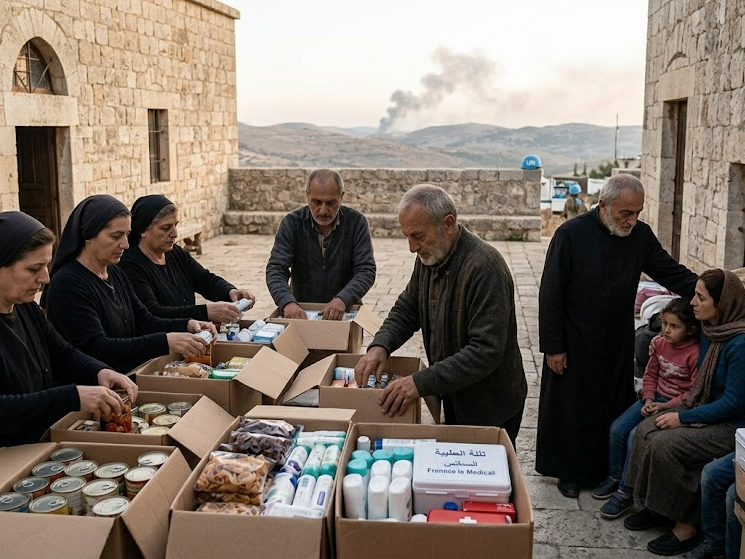
Beyond providing vital spiritual and emotional support, the Church actively works to provide desperately needed tangible humanitarian aid.
Monasteries, convents, and large church halls across the safer regions of Lebanon have generously opened their doors to internally displaced persons.
They provide emergency housing and safety for these refugees from the south, strictly regardless of the displaced person’s religious affiliation or background.
Organizations like Caritas Lebanon and numerous other Christian non-governmental organizations have been working tirelessly around the clock.
They risk their own safety to rapidly distribute essential food parcels, critical medical supplies, and basic sleeping mattresses to desperate families.
Many of these refugees fled the sudden bombings in the dead of night with absolutely nothing but the clothes currently on their backs.
Finding Meaning: The Theological Parallels of Suffering
For the truly faithful, the harsh intersection of Good Friday observances and modern warfare is deeply, painfully symbolic.
The entire theological premise of Good Friday is fundamentally centered on the difficult concept of unjust, brutal suffering.
According to Christian scripture, Jesus Christ, an innocent man, was unfairly subjected to extreme state-sponsored violence, public torture, and a brutal execution.
When Lebanese Christians observe this incredibly solemn day amidst the smoking rubble of their own destroyed neighborhoods, the biblical story shifts.
The narrative of the Passion completely ceases to be a piece of ancient history and instantly becomes a terrifying, present reality.
Worshippers sitting in the dark draw direct, undeniable parallels between the historical suffering of Christ on the wooden cross and their own current trauma.
They see the face of Christ in the suffering of innocent, modern civilians, including terrified children and helpless elderly residents.
These non-combatants are being unjustly killed, severely injured, or violently displaced by a massive, uncaring machinery of war.
However, the ultimate Christian narrative absolutely does not end in the darkness and despair of Good Friday.
The intense suffering of the cross is merely a necessary prelude to the glorious, triumphant resurrection promised on Easter Sunday.
This specific theological progression provides a vital, powerful psychological lifeline for Lebanese Christians enduring the current nightmare.
The intense, localized mourning of Good Friday, heavily exacerbated by the terrifying sounds of Israeli attacks, is endured with a deeply held, stubborn belief.
They hold onto the faith that their own personal Sunday is eventually coming to the region.
They believe with all their hearts that peace, national restoration, and abundant life will eventually and permanently triumph over war, destruction, and death.
A Perfect Storm: Lebanon’s Compounding National Crises
It is fundamentally impossible to discuss the dire plight of Lebanese Christians observing Good Friday under military fire without acknowledging the broader national context.
The entire country of Lebanon is currently navigating a period of unprecedented, multi-layered national catastrophe.
The nation is not merely dealing with a localized, violent border war in the south.
Simultaneously, Lebanon is desperately trying to survive one of the absolute worst, most complete economic collapses recorded in modern global history.
The national currency, the Lebanese Lira, has tragically lost over ninety-five percent of its actual purchasing value in just a few short years.
Lifelong family savings stored in local banks have been completely wiped out, and national poverty rates have skyrocketed to unimaginable, unprecedented levels.
Furthermore, Lebanon is suffering from severe, paralyzing political dysfunction at the highest levels of government.
The nation has been operating without a fully functioning government cabinet or a sitting President for a highly extended, damaging period of time.
This massive political void leaves the failing state entirely unable to provide basic public services, electricity, or manage the compounding crises effectively.
Additionally, the deep psychological trauma of the massive 2020 Beirut Port explosion still lingers heavily and darkly over the entire national population.
When you compound this devastating economic ruin and political reality with the daily, lethal threat of airstrikes in the south, the situation becomes unbearable.
The continued resilience of the Lebanese people observing their holy days under these impossible conditions is nothing short of a modern miracle.
Simply buying the basic, necessary food ingredients for traditional Good Friday and Easter meals has become a complete financial impossibility for many families.
This harsh economic reality has forced the community to strip their holiday observances down to the bare, strictly spiritual essentials.
Global Outcry: International and Diaspora Reactions
The heartbreaking plight of Christians in Lebanon, along with all innocent civilians violently affected by the border crossfire, has successfully drawn significant international attention.
This global focus naturally intensifies during major religious holidays when the stark contrast between peace and war is most visible.
Pope Francis has consistently and vocally kept the suffering nation of Lebanon in his daily prayers and major public addresses.
During his highly publicized messages to the world, which perfectly coincide with the Easter season, the Pope frequently highlights the intense suffering in the Middle East.
The Vatican hierarchy has repeatedly and urgently called for an immediate, lasting military ceasefire across all borders.
They constantly demand the strict protection of vulnerable civilian populations and advocate fiercely for peaceful diplomatic resolutions to the regional conflicts.
Furthermore, Lebanon proudly boasts a massive, highly active, and deeply connected global diaspora community.
There are millions of Lebanese Christians currently living safely and prosperously in the United States, Canada, Australia, South America, and across Europe.
During the emotionally charged Holy Week, these dedicated diaspora communities actively organize massive financial fundraisers, prayer vigils, and global awareness campaigns.
They work tirelessly to send financial aid and show deep solidarity to support their suffering brethren trapped back home.
The terrifying news images of their ancestral hometowns under heavy fire during Good Friday serve as a highly painful, motivating reminder.
It reminds them constantly of the extreme fragility and desperate needs of their beloved, war-torn homeland.
Conclusion
The solemn observance of Good Friday is inherently a deep, spiritual reflection on the concepts of darkness, innocent suffering, and ultimate sacrifice.
For Christians in Lebanon observing Good Friday under Israeli attacks, these ancient theological concepts are tragically woven into the very fabric of their daily survival.
The forced cancellation of beloved public processions, the terrifying echo of artillery disrupting silent prayer, and the mass displacement of historic communities paint a highly grim picture.
It is the stark, undeniable reality of an ancient faith attempting to survive under the heavy, indiscriminate fire of modern warfare.
Yet, amidst the overwhelming devastation of the ongoing Israel-Hezbollah crossfire, the enduring, stubborn spirit of the Lebanese Christian community continues to shine brightly through the smoke.
Their absolute refusal to let the chaos of war entirely extinguish the light of their holy days speaks to a profound, inspiring level of human resilience.
They deeply mourn their unjustly killed dead, they bravely pray for their military enemies, and they stubbornly look forward toward a brighter future.
For these dedicated believers, the tragedy of Good Friday is a shared, deeply painful lived experience right now.
However, this immense burden is bravely borne with the unshakeable, profound hope of their faith.
They truly believe that just as the sun inevitably rose on the first Easter morning, a lasting peace will eventually dawn again on the beautiful hills of southern Lebanon.
FAQs
Q1. What percentage of Lebanon’s total population is currently considered Christian?
While an official, exact demographic census has not been conducted in Lebanon since the year 1932 to maintain delicate political balance, estimates remain clear.
It is widely estimated by international organizations that Christians make up roughly thirty-two to thirty-five percent of the total national population today.
This significant demographic statistic officially makes Lebanon the country with the highest total percentage of Christians in the entire Middle East region.
Q2. Why are peaceful Christian villages in southern Lebanon currently being affected by Israeli military attacks?
The ongoing, violent conflict in southern Lebanon is primarily a military engagement between the Israeli Defense Forces and the militant group Hezbollah.
Hezbollah operates as an Iran-backed Shiite militant organization situated heavily within the borders of Lebanon.
While the historic Christian villages located in the south are not officially affiliated with Hezbollah, their geographic location guarantees their involvement.
Q3. How exactly do traditional Good Friday customs in Lebanon differ from those typically practiced in the West?
While the core, fundamental theology of the crucifixion remains exactly the same globally, Lebanese Good Friday traditions are uniquely different.
These local traditions are heavily and beautifully influenced by ancient Eastern, Syriac, and Levantine cultural practices.
The church liturgy on this day often includes incredibly ancient Syriac and Arabic chants that are characterized by deep, emotionally mournful melodies.